15% off on your first order Click here to sign up

When 123 Nations Said Yes — And America Said No

When 123 Nations Said Yes — And America Said No

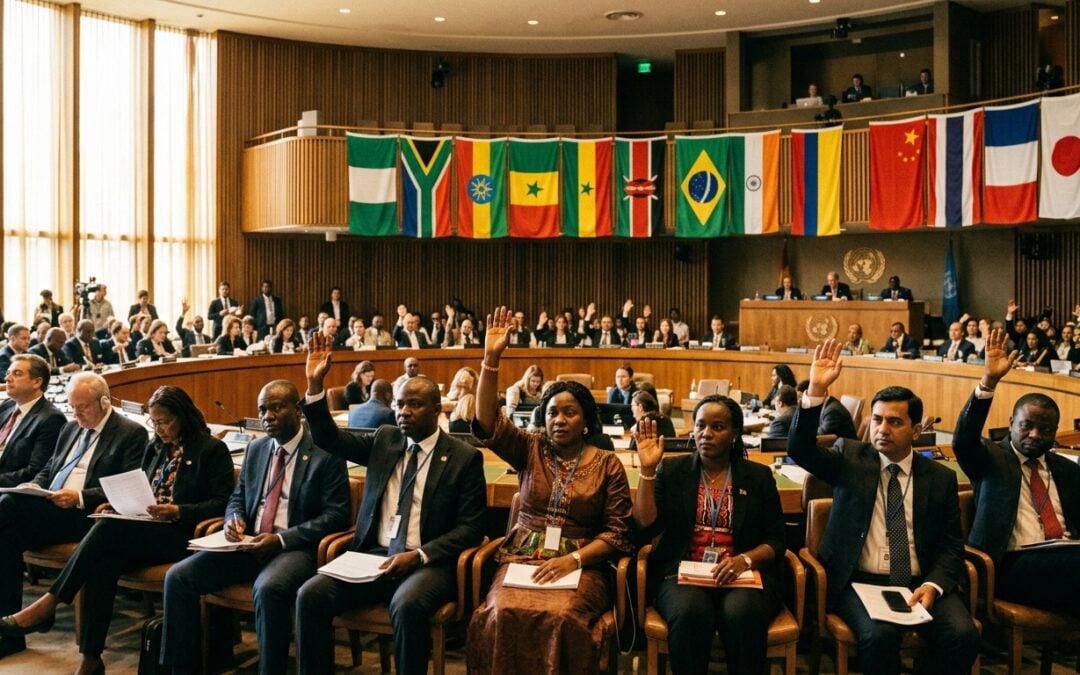
When 123 nations stood up and voted yes — and the United States, Israel, and Argentina voted no — the whole world saw it.

You can’t unsee a number like 123. That’s not a split decision. That’s not a close call. That’s the world — the majority of it, including most of Africa, the Caribbean, Latin America, and Asia — speaking in one voice.

And America said no.

What Actually Happened
Global South nations solidarity Africa UN vote

The UN General Assembly vote on a resolution demanding a ceasefire and protection for civilian lives drew 123 nations in favor. Three voted against: the United States, Israel, and Argentina.

That’s the same United States that has spent decades declaring itself the global protector of human rights and democracy. The same America that led the charge on international coalitions when it suited our foreign policy interests.

But 123 nations looked at the evidence — the bodies, the hospitals, the children, the families wiped from the civil registry — and voted yes. America looked at the same evidence and voted no.

This Isn’t New — This Is Pattern

Here’s what I need us to understand: this vote didn’t happen in a vacuum. It’s part of a documented pattern with a paper trail.

The United States has vetoed or voted against UN resolutions protecting Black and Brown lives more times than most people realize. From apartheid South Africa — where the US often abstained or blocked stronger action — to Haiti, to the Congo, to Palestine, the calculus is always the same.

Whose lives trigger international intervention? And whose lives get a no vote?

We’ve seen this pattern in our own history. When Black Americans demanded federal protection during the Civil Rights movement, Congress stalled. When Black communities demanded accountability for police violence, the federal response was to monitor the protesters, not the police. The people with power have always been reluctant to use that power in defense of people who look like us.

The 123 nations who voted yes understand something that American foreign policy still refuses to say out loud: human rights are not selective. You don’t get to claim them as your brand and then vote against them when it’s inconvenient.

Why the Black Community Should Be Paying Attention
Black mother and daughter reading history together

Fam, this is personal. Not just politically — personally.

The same arguments used to justify America’s no vote — “it’s complicated,” “both sides,” “we have strategic interests” — are the same arguments used to explain why our community’s pain is never quite urgent enough for federal action.

When 123 nations can see the evidence clearly enough to vote yes, but America votes no, that tells you something about where our government thinks human lives rank in the order of priorities.

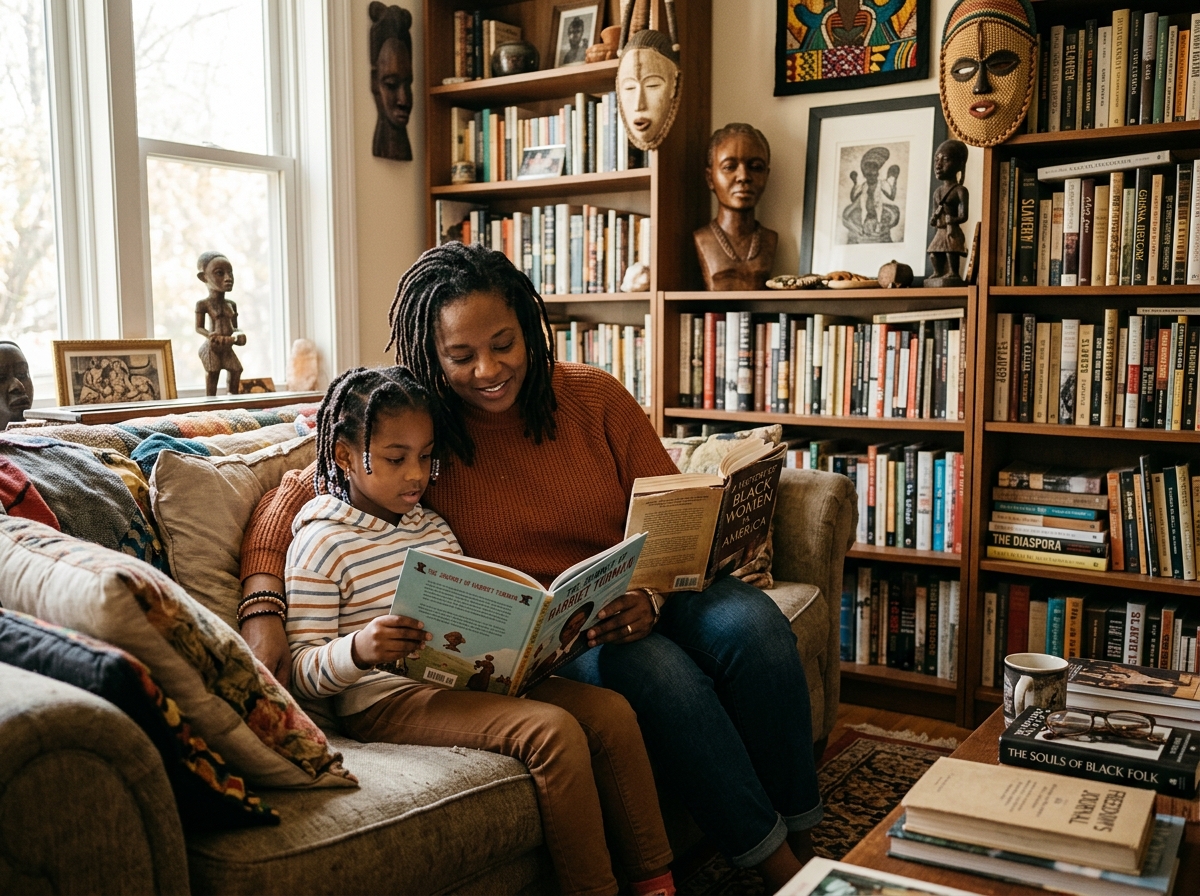
And here’s what I want you to sit with: this is why we teach our children history at home. Because the version they’ll get in school will gloss over America’s voting record at the UN. It’ll present our foreign policy as noble and principled, with a few regrettable exceptions.

We know better. We’ve lived the exceptions.

✊🏾 Join 500,000+ families keeping Black history alive at home.

Get tools, stories, and exclusive offers delivered to your inbox.

[SUBSCRIBE] - Newsletter Tag Posts

What 123 Nations Voting Together Actually Means

I don’t want us to miss the significance of that number.

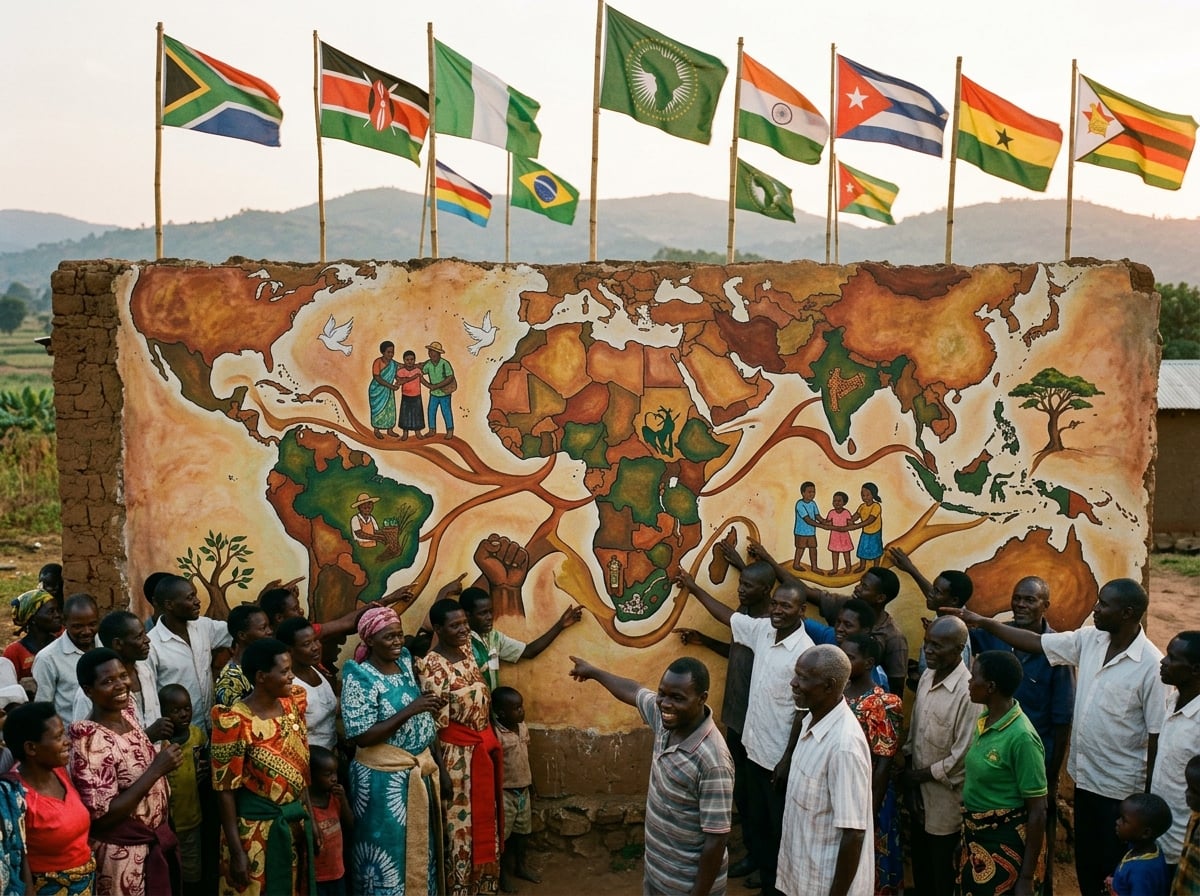
The Global South — Africa, the Caribbean, Southeast Asia, Latin America — came together in a way that rarely gets celebrated in American media. These are nations that the Western press usually covers as aid recipients or conflict zones or migration crises. They don’t get covered as a united moral voice.

But that’s exactly what 123 nations speaking together is: a moral voice. And it’s telling us something.

The world is not following America’s lead on this one. And that matters — because it means the political cover that has always come from “international consensus” is eroding. More and more, America’s no votes are standing alone on the wrong side of history.

Our ancestors knew what it felt like to be on the receiving end of a no vote from people with power. They knew what it felt like to petition and protest and prove your humanity over and over and still be told no.

When we teach our children about the world, we have to teach them this history too.

What We Can Do From Here
Black activist community organizing meeting

This isn’t a moment to despair. It’s a moment to be clear-eyed.

Know the vote. Bookmark it, share it, teach it. When someone tells you America always stands on the right side, you have a documented, public record that says otherwise.

Connect the dots for your children. History isn’t just the past — it’s the pattern that explains today. The UN vote, the civil rights struggles, the ongoing fight for accountability at home: it’s the same story, told across generations.

Support the educators who refuse to sanitize it. Whether that’s an independent school, a homeschool curriculum, a community program, or resources like our Black history flashcard collections — find tools that tell the whole truth.

History Is Watching

123 nations voted yes. Three said no.

That’s not a footnote. That’s a verdict. And history has a long memory.

Our job — as parents, as grandparents, as community members — is to make sure our children grow up knowing the truth about how power works in this world. Not the textbook version. Not the version that paints America as the reluctant hero who sometimes makes hard choices.

The full version. The honest version. The version where 123 nations stood up for human lives and three of the most powerful governments on earth said no.

That’s the version our children deserve to know.

What does this vote bring up for you? I want to hear how you’re talking about it with your family. Drop it in the comments — or read how we connect today’s politics to the long arc of Black history.

Don’t miss what matters.

Join the Urban Intellectuals family — history, culture, and tools for raising empowered Black children. Straight to your inbox.
[SUBSCRIBE] - Newsletter Tag Posts
The Black Codes: How Slavery Was Rebranded After the Civil War

The Black Codes: How Slavery Was Rebranded After the Civil War

🎙️ LISTEN TO THIS ARTICLE

Prefer to listen? We turned this article into a podcast conversation.

Related: No One Becomes a Billionaire Without Taking From Someone

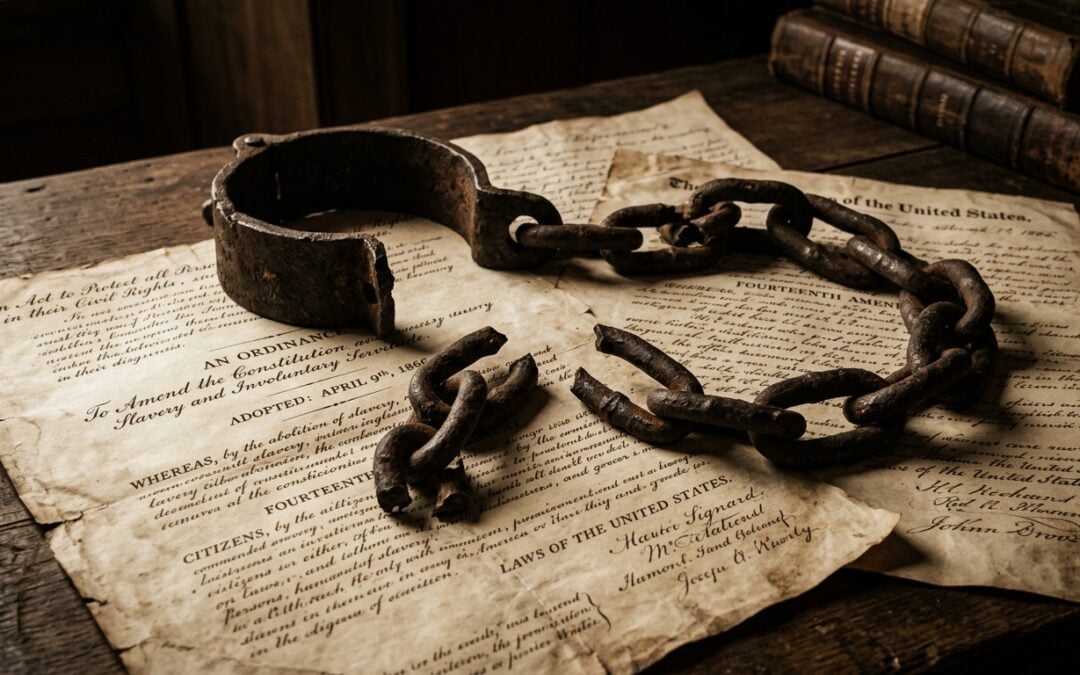
The Thirteenth Amendment ended slavery in 1865.

Or did it?

Read it carefully. The amendment states that “neither slavery nor involuntary servitude, except as a punishment for crime whereof the party shall have been duly convicted, shall exist within the United States.”

That loophole became the foundation for the Black Codes.

How the Codes Worked

Vagrancy laws criminalized being unemployed. If you were Black and couldn’t prove you had a job, you were arrested and forced to labor.

Apprenticeship laws allowed white “employers” to take custody of Black orphans and dependents, often their former enslavers’ children.

Civil restrictions forbade Black people from carrying firearms, testifying against white people, serving on juries, or holding public office.

From Black Codes to Jim Crow

When Reconstruction ended in 1877, white supremacists regained power. The Black Codes evolved into Jim Crow laws — more sophisticated, more comprehensive, and far more durable.

The “punishment for a crime” loophole in the Thirteenth Amendment? It’s still there. It’s still being used.

The Echoes Today

When you look at mass incarceration statistics, you’re looking at the legacy of the Black Codes. The United States has 5% of the world’s population but holds 25% of its prisoners.

The Black Codes weren’t a historical aberration. They were a template.

Explore Black History Flashcards and give your family the knowledge they need.

Also see: 50 Truths They Tried to Erase: Why This Book Is Hitting Different Right Now

Why Volume 1 Black History Flashcards Still Matter in 2026

Why Volume 1 Black History Flashcards Still Matter in 2026

🎙️ LISTEN TO THIS ARTICLE

Prefer to listen? We turned this article into a podcast conversation.

In 2018, we printed the first box of Black History Flashcards Volume 1 not knowing if anyone would care.

We’d spent months researching. Debating which stories made the cut. Arguing over which faces deserved to be on those first 52 cards. We wanted every single one to matter — not just as trivia, but as doorways into conversations we knew Black families needed to have.

Eight years later, families are still buying Volume 1. Not as a nostalgia piece. As a foundation.

Here’s why.

The Fundamentals Don’t Get Old

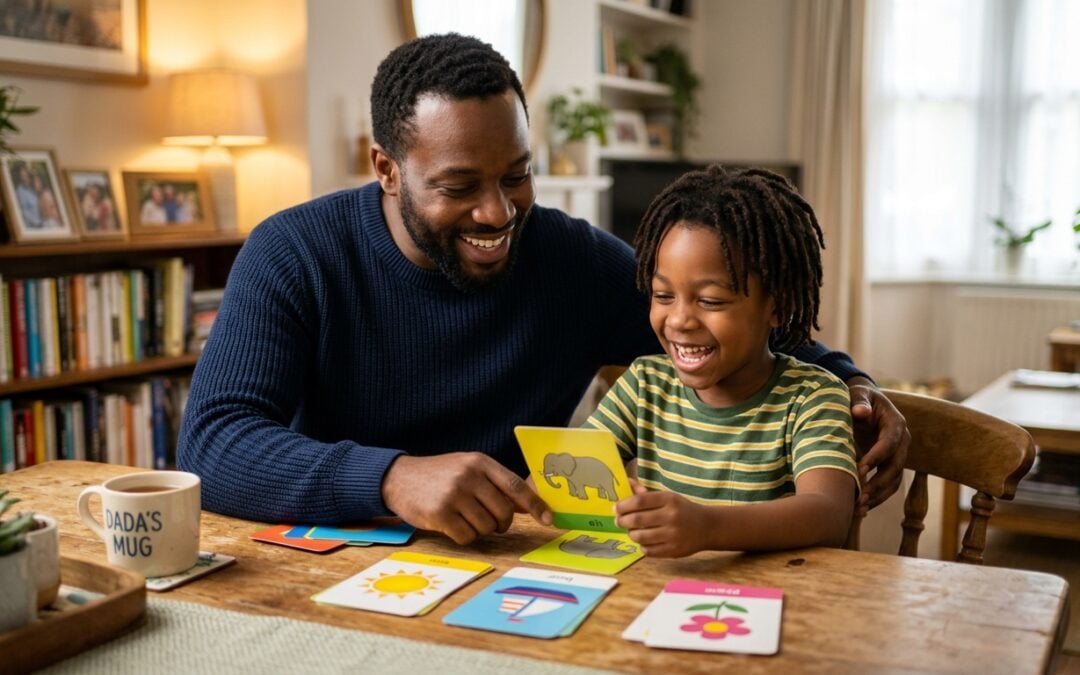
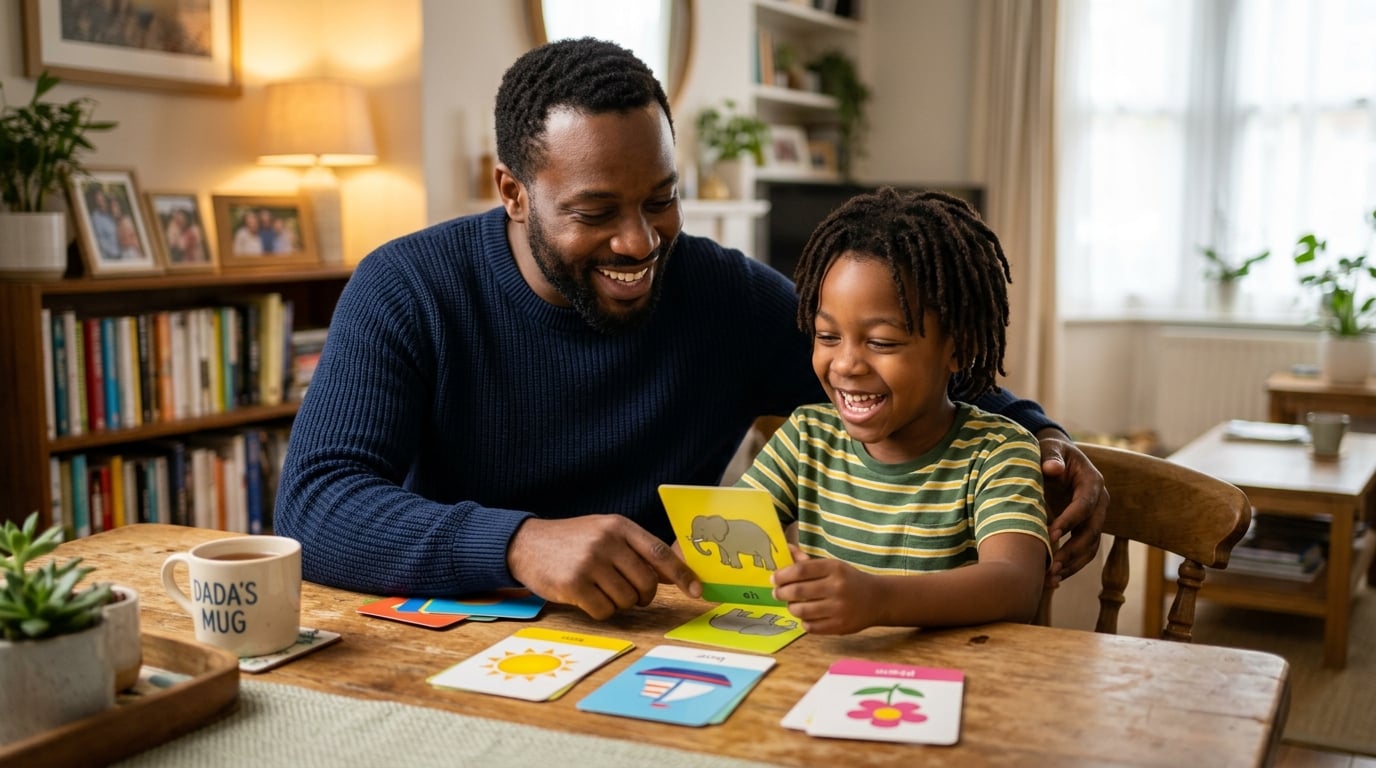
Family learning with flashcards at table

Volume 1 covers what we call the “can’t-miss” figures — Harriet Tubman, Frederick Douglass, Rosa Parks, Martin Luther King Jr., Malcolm X. The names that every Black child should know before they leave elementary school.

But here’s the thing: knowing the names isn’t the same as knowing the stories.

Our cards don’t just list achievements. They tell you that Harriet Tubman was a spy for the Union Army. That she led the Combahee Ferry Raid and freed more than 700 enslaved people in a single night. That she did all this while living with seizures from a traumatic brain injury inflicted by an enslaver.

That’s not trivia. That’s inspiration. That’s the difference between knowing about someone and understanding what made them extraordinary.

The Questions They Spark

Every card in Volume 1 ends with a conversation starter. Not a quiz question — a real question.

“What would you risk for freedom?”

“How do you stand up when everyone around you is sitting down?”

“What does it mean to change your mind publicly, the way Malcolm X did?”

These aren’t questions with easy answers. They’re questions that build critical thinking. Questions that help children see themselves in history. Questions that turn a five-minute card game into a thirty-minute family discussion about values, courage, and strategy.

The Foundation for Everything Else

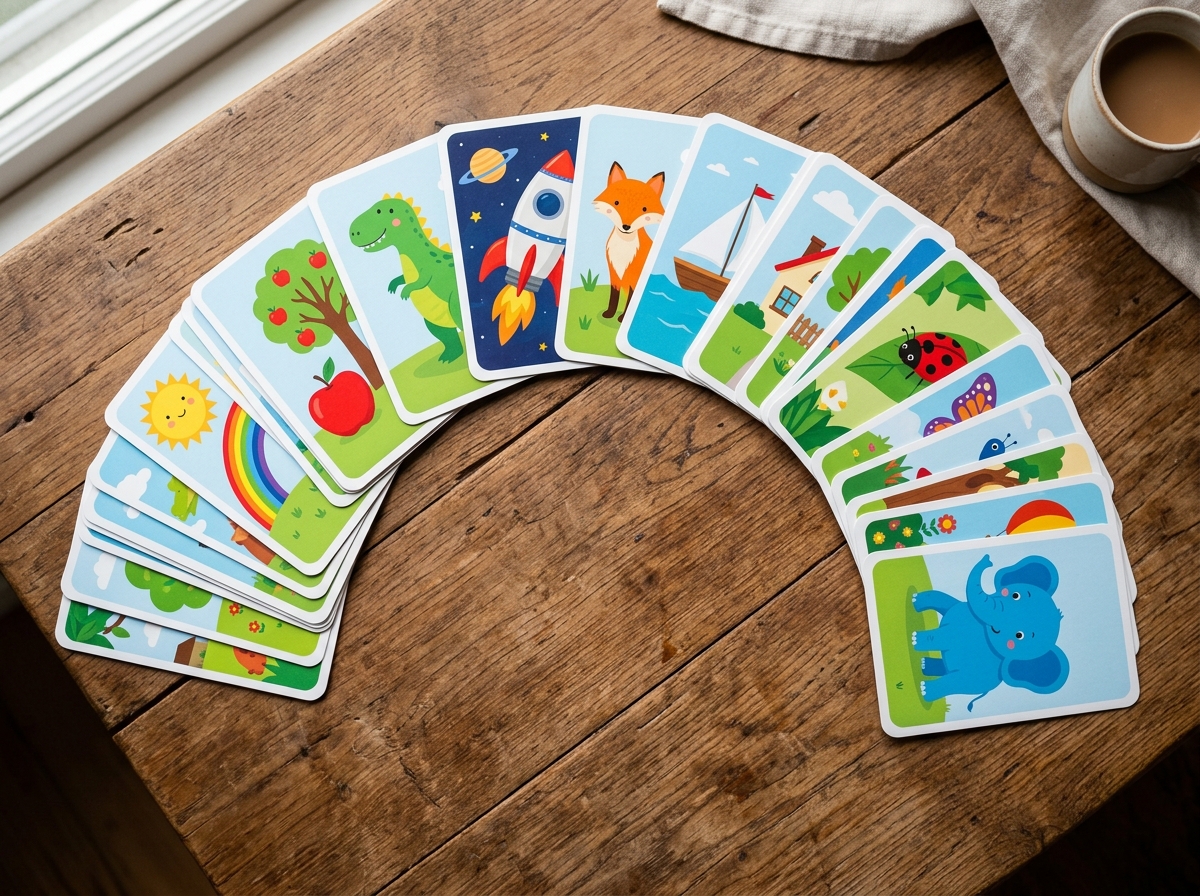
Educational flashcards spread on table

We’ve released other volumes since then. Volume 2 goes deeper into science, technology, and invention. The Women’s Edition centers Black women’s contributions specifically. The Africa Edition connects our history to the continent.

But families keep coming back to Volume 1 because it’s the foundation.

You can’t understand Mae Jemison (Volume 2) without understanding the space race and civil rights. You can’t appreciate Ida B. Wells (Women’s Edition) without understanding Reconstruction and lynching. You can’t grasp the full scope of Black resistance without knowing what came before.

Volume 1 is where the timeline starts.

What Parents Tell Us

We get emails. DMs. Comments at events.

“My son asked why his school doesn’t teach this.”

“My daughter said she wants to be ‘brave like Harriet.’”

“We do three cards every night at dinner. It’s become our thing.”

One grandmother told us she uses the cards to homeschool her grandchildren — that Volume 1 is her entire Black history curriculum for the first semester.

Another father said his teenage son, who’d never shown interest in “school stuff,” started reading the cards on his own and asking questions about the Black Panthers.

This is what we hoped for. This is why we keep printing them.

✊🏾 Join 500,000+ families keeping Black history alive at home.

Get tools, stories, and exclusive offers delivered to your inbox.

[SUBSCRIBE] – Newsletter Tag Posts

The Gaps Are Still There

Let’s be honest about something: public school hasn’t gotten much better at teaching Black history since 2018.

In many states, it’s gotten worse. Book bans. Curriculum restrictions. The same old “slavery-to-Martin-Luther-King-to-Obama” timeline that leaves out everything complicated, everything radical, everything that explains why we’re still fighting.

Volume 1 doesn’t solve that. But it fills the gaps.

Every family that works through these cards is building a counter-narrative. A foundation of knowledge that can’t be taken away. A set of reference points for understanding current events.

Start Here

Child studying with flashcards

If you’re new to Urban Intellectuals, start with Volume 1. Not because it’s the oldest, but because it’s the most important.

The fundamentals matter. The foundations hold everything else up. And these 52 cards — each one researched, debated, and designed with intention — will give your family something that no app, no video, no worksheet can provide.

A shared vocabulary for discussing Black excellence. Black struggle. Black future.

Get Volume 1 today and start the conversations that matter.

Don’t miss what matters.

Join the Urban Intellectuals family — history, culture, and tools for raising empowered Black children. Straight to your inbox.
[SUBSCRIBE] – Newsletter Tag Posts

Which figure from Black history would you add to Volume 1 if you could? Hit reply and tell me.

Love, peace, and power to the people.

What Really Happened to Zelalem Eshetu Ewnetu: The Black Engineer Killed by LA Sheriffs

What Really Happened to Zelalem Eshetu Ewnetu: The Black Engineer Killed by LA Sheriffs

🎙️ LISTEN TO THIS ARTICLE

Prefer to listen? We turned this article into a podcast conversation.

In April 2017, a 28-year-old engineer named Zelalem Eshetu Ewnetu was shot and killed by Los Angeles County Sheriff’s deputies in the parking lot where he slept.

He wasn’t running from police. He wasn’t accused of a violent crime. He was a Black Ethiopian immigrant who’d come to America on a scholarship, earned his degree from the University of Idaho, and built a career as an engineer for the California Public Utilities Commission.

Eight years after arriving full of promise, he was dead.

The Official Story vs. The Questions

Police evidence vehicle with bullet holes

Deputies say they approached Ewnetu’s vehicle after smelling marijuana and spotting what looked like a vehicle burglary in progress. According to their account, Ewnetu refused to exit his car. When they tried to remove him, they claim he brandished a gun and aimed it at them.

They fired. He died.

The District Attorney’s office reviewed the case and cleared the deputies, ruling it lawful self-defense. Case closed, right?

Not exactly.

What the Family Found

Ewnetu’s family started asking questions. And the more they looked, the less the official story held together.

First, there were the bullet holes. Photos of the vehicle showed shots through the rear windshield, which didn’t match the account of a face-to-face confrontation.

Then there were the conflicting statements. One police report said Ewnetu refused to exit and pulled a gun while still inside. Another version suggested he got out, broke free, and ran back to his car to retrieve a weapon.

Which was it?

A detective mentioned the gun was found in the back seat — a detail that raises questions about whether Ewnetu could have been aiming at deputies if the weapon was behind him.

The Pattern We’re Still Seeing

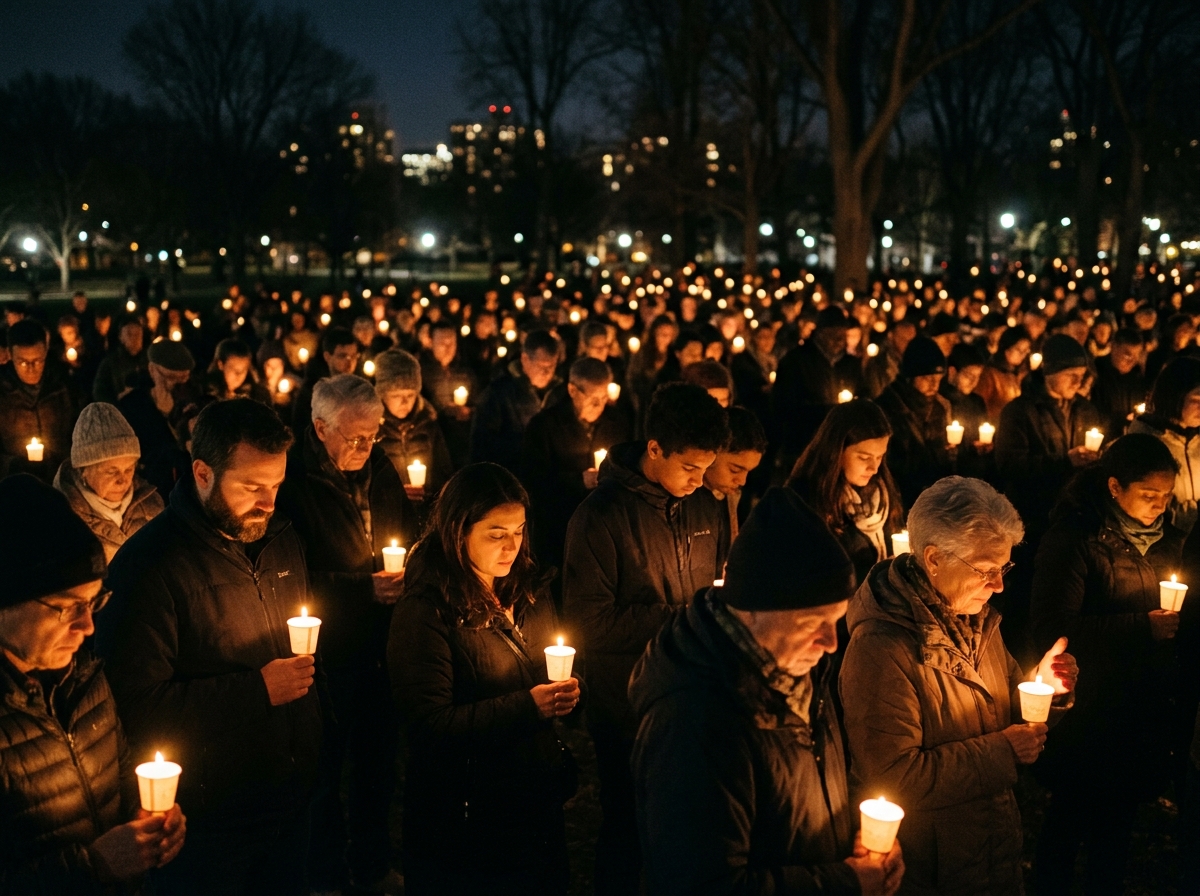
Community vigil with candles

This case isn’t just about one night in Los Angeles. It’s about a documented pattern with a paper trail.

Black and brown people — especially immigrants and those experiencing mental health challenges or homelessness — keep dying in encounters with law enforcement under circumstances that don’t quite add up.

Ewnetu wasn’t a threat to public safety. He was sleeping in his car. The “crime” deputies were investigating? A potential vehicle burglary that may have simply been a man resting in his own vehicle.

What Justice Looked Like

In 2018, Ewnetu’s family filed a wrongful death lawsuit against Los Angeles County, alleging negligence, battery, and civil rights violations. They argued that deadly force was “unnecessary and unlawful” — that their son posed no real threat that night.

In July 2022, they reached a tentative settlement. Money can’t bring him back. But it was an acknowledgment, however quiet, that something went wrong.

Why We Need to Remember

Professional Black engineer portrait

Zelalem Eshetu Ewnetu wasn’t a statistic. He was a scholarship student who believed in America’s promise. An engineer who contributed to public infrastructure. A son, a brother, a member of the Ethiopian community.

When we say Black lives matter, we’re not just talking about the names that trend on social media. We’re talking about the Zelalems — the immigrants, the professionals, the quiet contributors who are supposed to be “safe” because they followed all the rules.

He followed the rules too. Look where it got him.

✊🏾 Join 500,000+ families keeping Black history alive at home.

Get tools, stories, and exclusive offers delivered to your inbox.

[SUBSCRIBE] – Newsletter Tag Posts

Teaching Our Children the Full Story

Cases like Ewnetu’s are why we teach our children to ask critical questions. To look beyond official narratives. To understand that history isn’t just what happened — it’s also what was recorded, what was buried, and what we choose to remember.

This is why we built the Black History Flashcards. Not just to celebrate triumphs, but to document the ongoing struggle. To give our children the tools to recognize patterns, question authority, and understand that their safety isn’t guaranteed by degrees or respectability.

Knowledge is protection. History is preparation. And every card in our deck is a reminder that our stories matter — all of them, especially the uncomfortable ones.

Explore Black History Flashcards and start building your family’s foundation today.

Don’t miss what matters.

Join the Urban Intellectuals family — history, culture, and tools for raising empowered Black children. Straight to your inbox.
[SUBSCRIBE] – Newsletter Tag Posts

If this story moved you, these pieces are part of the same conversation:

What questions do you think our children should be asking about encounters between Black people and police? Hit reply and tell me.

Love, peace, and power to the people.

Teaching Your Kids to See the Mask Before It Slips

Teaching Your Kids to See the Mask Before It Slips

🎙️ LISTEN TO THIS ARTICLE

Prefer to listen? We turned this article into a podcast conversation.

You know the moment.

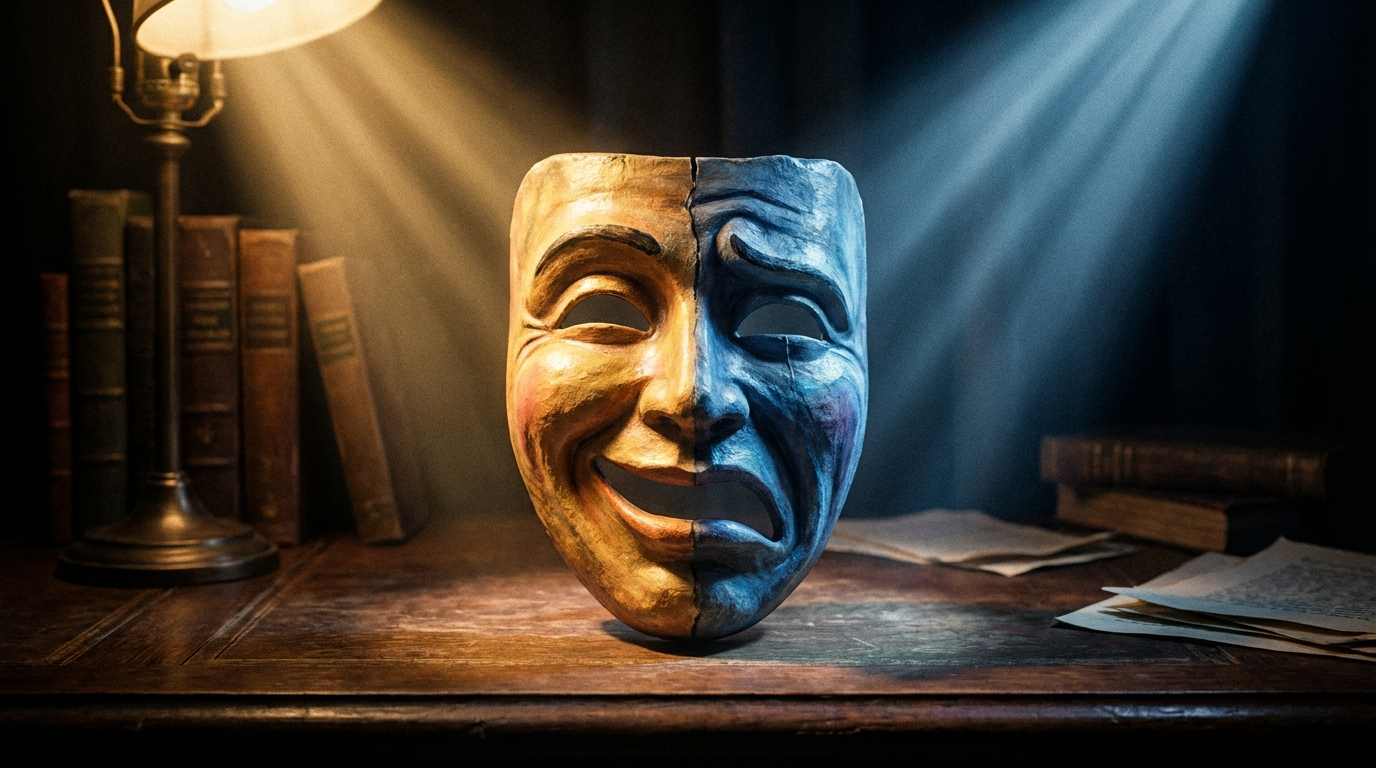
Someone says something that sounds almost fine. Almost friendly. And then — just for a second — the mask slips. The comment that reveals what they really think. The “compliment” that’s actually an insult. The policy that’s technically neutral but lands on Black people every single time.

Your kids are going to encounter this. Probably already have. The question is: will they recognize it?

Why the Mask Exists

Two-faced theatrical mask representing covert racism

Racism in 2026 doesn’t usually announce itself.

It doesn’t wear a hood. It doesn’t use slurs in public. It’s learned to code-switch, to dress itself up in plausible deniability, to hide behind “I didn’t mean it like that” and “You’re being too sensitive.”

That’s by design. Overt racism gets consequences now — social, professional, sometimes legal. So it went underground. It learned to perform. It put on a mask.

And the mask is harder to fight than the hood ever was. Because when your child can’t name what just happened to them, they internalize it. They start wondering if maybe they really are being too sensitive. Maybe they really didn’t deserve that opportunity. Maybe the teacher really does grade everyone that way.

The mask works because it creates doubt. And doubt is corrosive.

What the Mask Looks Like

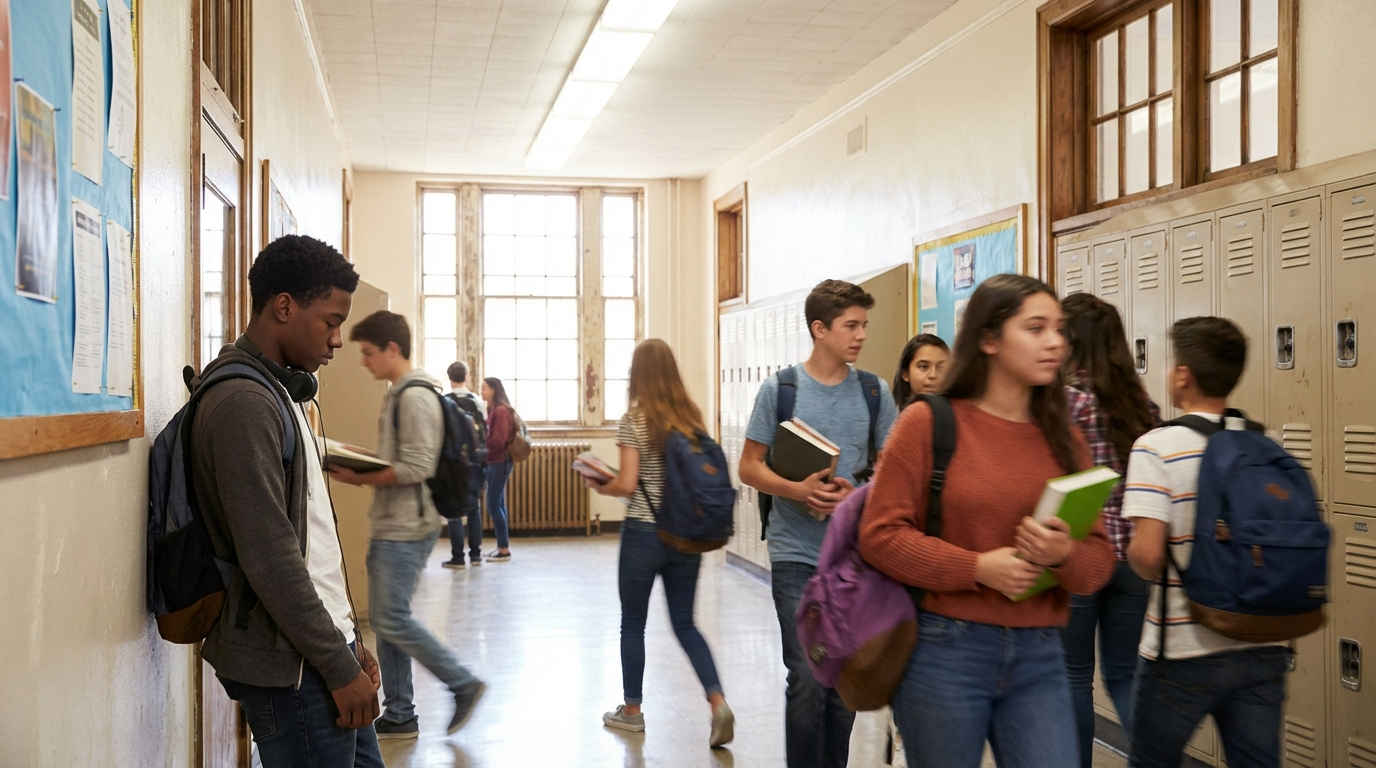
Black teenager in school hallway looking contemplative

Let’s get specific, because your kids need concrete examples — not abstract lectures.

The surprised compliment: “Wow, you’re so articulate!” Translation: I didn’t expect a Black person to speak well. It’s dressed up as praise, but the surprise is the tell.

The selective enforcement: The dress code that targets locs and braids but not messy buns. The “zero tolerance” policy that somehow tolerates certain kids more than others. The rules are written neutral. The enforcement never is.

The friendly gatekeeping: “I just don’t think they’re a good fit for the advanced track.” No specifics. No data. Just a feeling — and that feeling has a pattern.

The revisionist comfort: “Slavery was a long time ago.” “My family never owned slaves.” “I don’t see color.” These aren’t just ignorant — they’re active erasure. They’re designed to make the speaker comfortable by making your child’s reality invisible.

The weaponized fragility: The tears. The hurt feelings. The “I can’t believe you’d accuse me of that.” Suddenly the person who caused harm becomes the victim, and your child is the aggressor for naming what happened.

Your kids need to be able to spot these patterns. Not to become paranoid — but to trust their own perception.

How to Talk About It

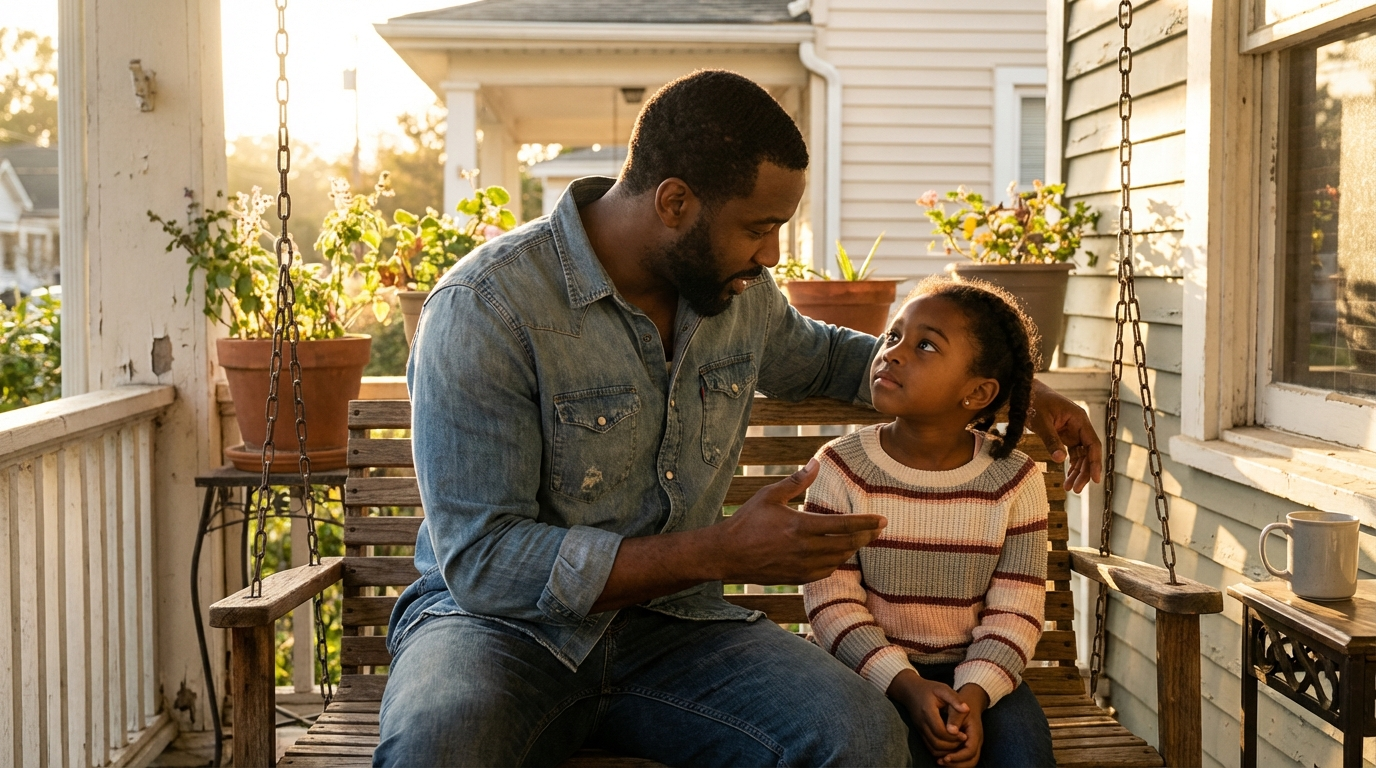
Black father having a warm conversation with his daughter on a porch

This doesn’t have to be a heavy, sit-down lecture. In fact, it works better when it’s woven into everyday life.

Name it in real time. When you see it on TV, in the news, at the store — point it out. “Did you notice what happened there?” Let them practice identifying it in low-stakes situations before they face it personally.

Validate their instincts. When your child comes home and says something felt wrong, your first response matters more than anything. Not “Are you sure?” Not “Maybe they didn’t mean it.” Try: “Tell me what happened. I believe you.”

Give them language. Kids who can articulate what’s happening to them are harder to gaslight. Teach them words like “microaggression,” “implicit bias,” “tone policing.” Not to use as weapons — but as tools for understanding their own experience.

Practice responses. Role-play scenarios. What do you say when a teacher questions whether you wrote your own essay? When a classmate touches your hair without asking? When someone tells you you’re “not like other Black people”?

Having a response ready doesn’t prevent the harm. But it prevents the freeze. And that matters.

✊🏾 Join 500,000+ families keeping Black history alive at home.

Get tools, stories, and exclusive offers delivered to your inbox.

[SUBSCRIBE] – Newsletter Tag Posts

The Line Between Awareness and Anxiety

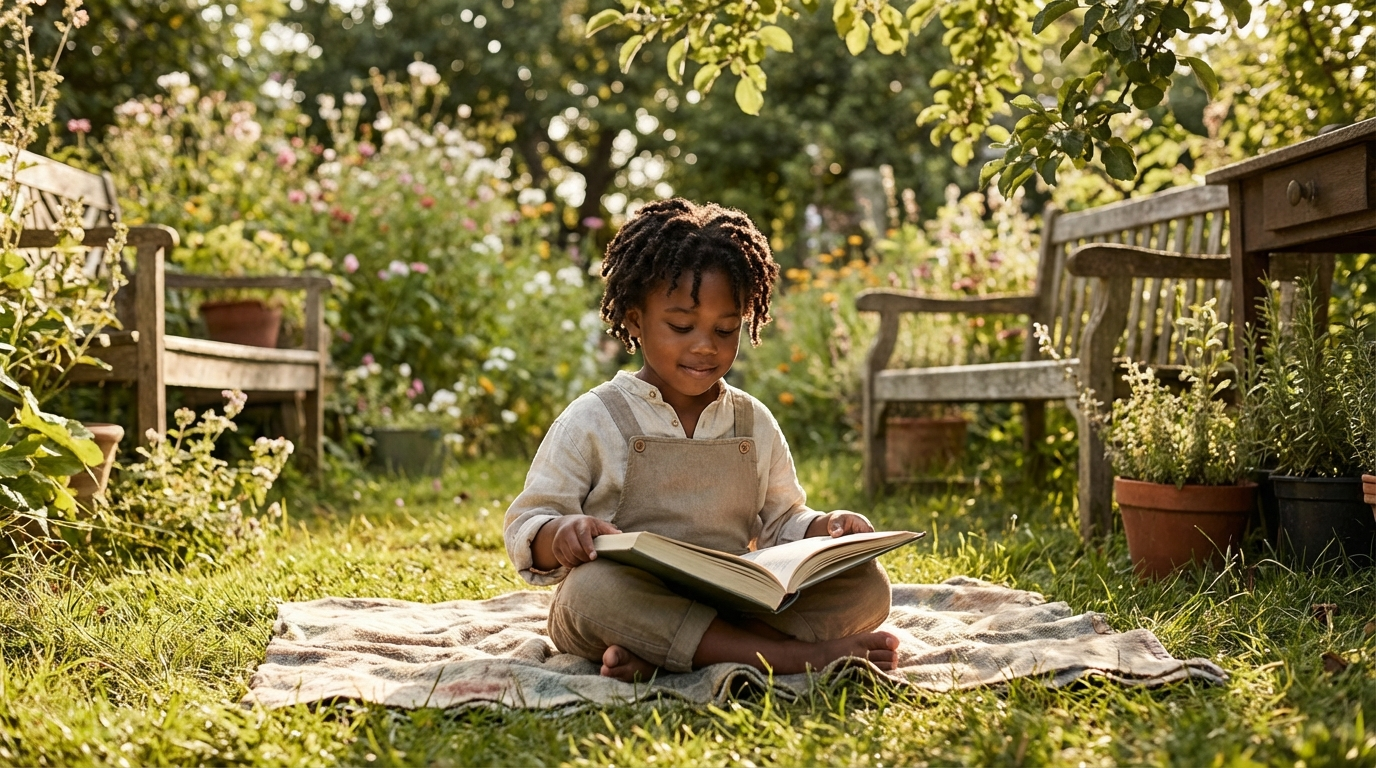
Black child reading peacefully in a garden

Here’s where it gets delicate — and where a lot of parents struggle.

You want your kids to see clearly. You don’t want them to see threats everywhere. That’s not awareness; that’s anxiety. And a child who’s anxious about every interaction with non-Black people isn’t empowered — they’re exhausted.

The balance: trust your perception, but don’t assume the worst. Teach your kids that not every awkward moment is racism. Sometimes people are just awkward. Sometimes a bad grade is just a bad grade.

But also teach them: when a pattern emerges — when the same “accidents” keep happening to the same kids — that’s not bad luck. That’s a system.

The goal isn’t suspicion. It’s discernment.

Build Their Foundation

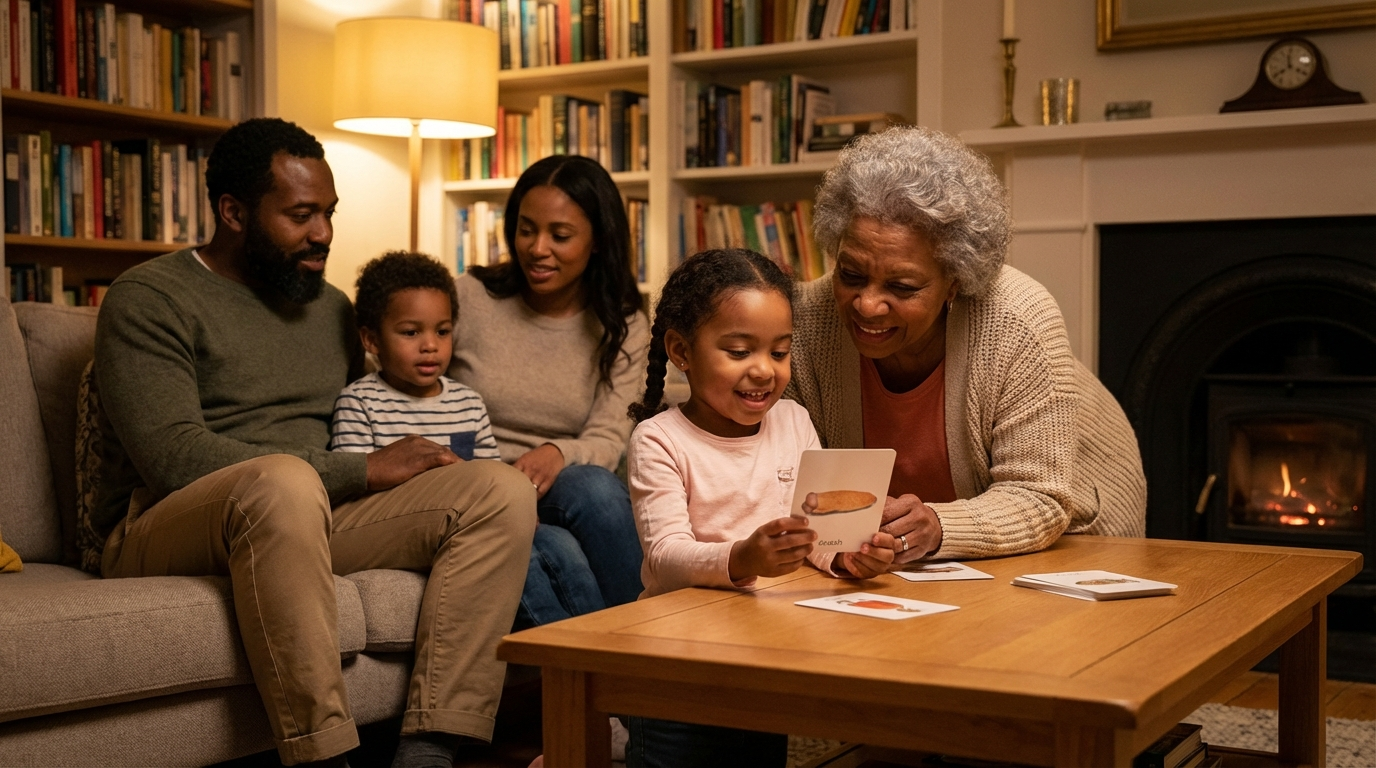
Black family studying flashcards together across generations

A child who knows their history is harder to shake.

When your daughter knows about Fannie Lou Hamer, she understands that speaking truth to power is a tradition, not a personality flaw. When your son knows about Robert Smalls, he understands that Black excellence has always existed — regardless of what anyone’s “surprise” implies.

That’s why building historical knowledge isn’t just academic. It’s armor. (Looking for ways to build that foundation? Try 12 Black History Activities at Home Kids Actually Love.) It’s the foundation that makes the mask recognizable because your child already knows the pattern goes back centuries. (Understanding that history starts with conversations — read How to Talk to Your Black Child About Racism.)

A child rooted in their story doesn’t need external validation. And someone who doesn’t need your approval is very hard to manipulate.

Start the Conversation

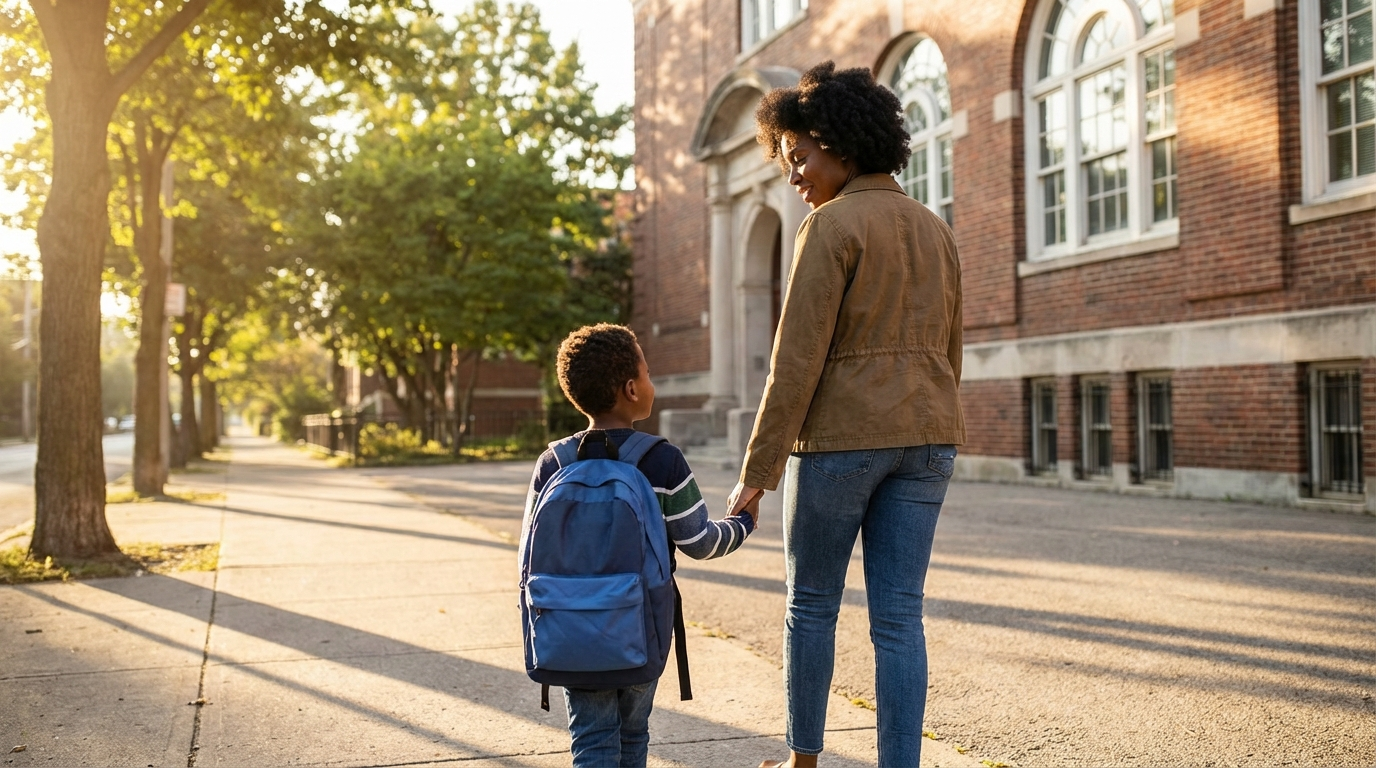
Black mother walking her son to school in morning light

You don’t need a curriculum. You need ten minutes and honesty.

Tonight, ask your kids: “Has anyone ever said something to you that sounded nice but felt wrong?”

Listen to what they say. Don’t fix it. Don’t minimize it. Just listen.

Then tell them: “That feeling? Trust it. It’s real. And you’re not the first person in our family to feel it.”

Connect them to the generations before who felt it too — and fought back anyway. That’s not a burden to pass on. It’s a gift.

What’s the moment you realized your own child was old enough for this conversation? Share your story — we’re all learning from each other. ✊🏾

Don’t miss what matters.

Join the Urban Intellectuals family — history, culture, and tools for raising empowered Black children. Straight to your inbox.
[SUBSCRIBE] – Newsletter Tag Posts

Related: Druski Isn’t Robinson: What the Difference Tells Us About How We Raise Our Kids

What Black Women Built That America Forgot to Mention

What Black Women Built That America Forgot to Mention

Every March, America celebrates Women’s History Month.

And every March, the same names cycle through: Susan B. Anthony. Elizabeth Cady Stanton. Rosie the Riveter.

Meanwhile, Black women built half this country and can’t even get a paragraph in the textbook.

The Erasure Is the Point

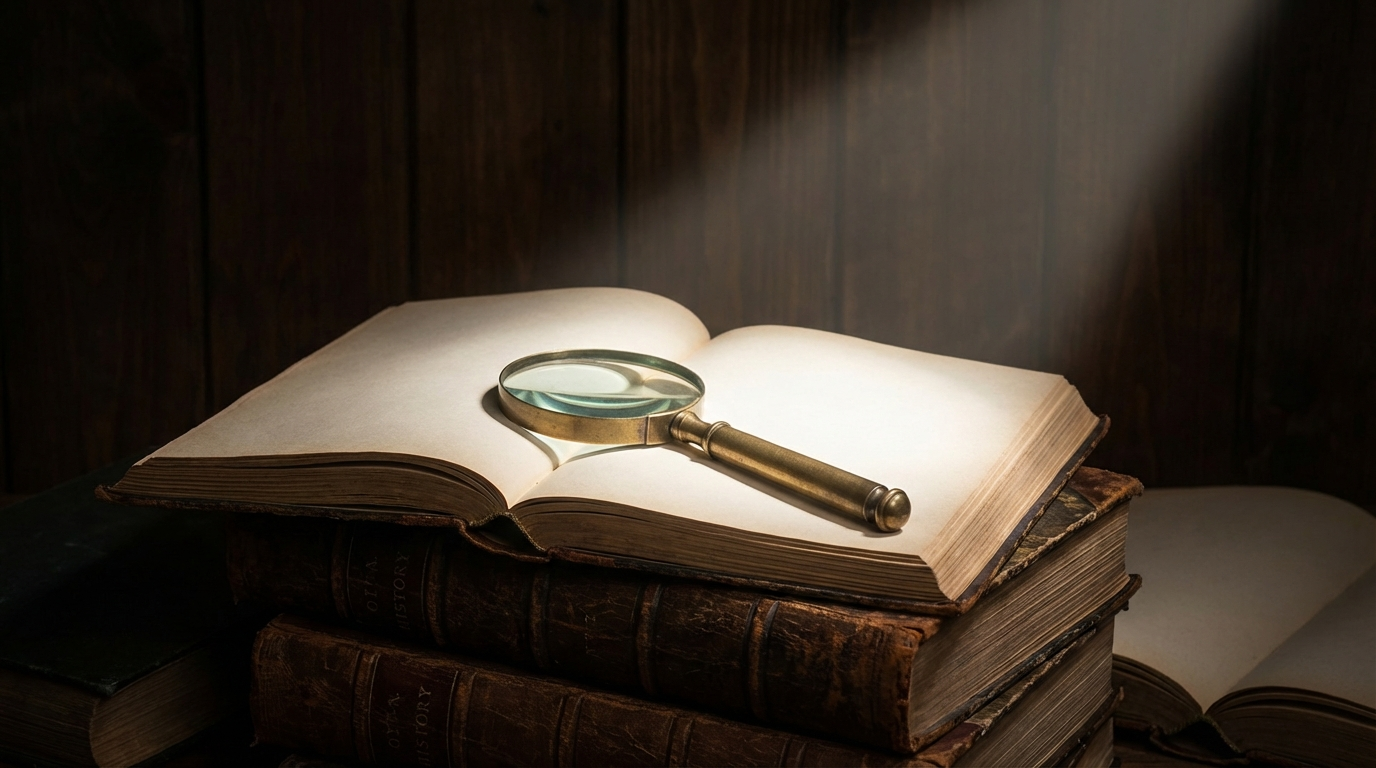
History textbooks with magnifying glass revealing missing Black women stories

Let’s be clear about something: Black women aren’t missing from history because they didn’t do anything. They’re missing because including them would change the entire story America tells about itself.

If you teach (read about Ruby Bridges) that Mary Kenner invented the sanitary belt in 1957 — a device that improved the lives of millions of women — you also have to explain why no company would manufacture it for decades. Because she was Black.

If you teach that Dr. Rebecca Lee Crumpler became the first Black woman physician in America in 1864, you have to explain what kind of country makes that achievement impossible for everyone who came before her.

The erasure isn’t accidental. It’s structural. And Women’s History Month, the way most schools teach it, is part of the problem.

The Builders

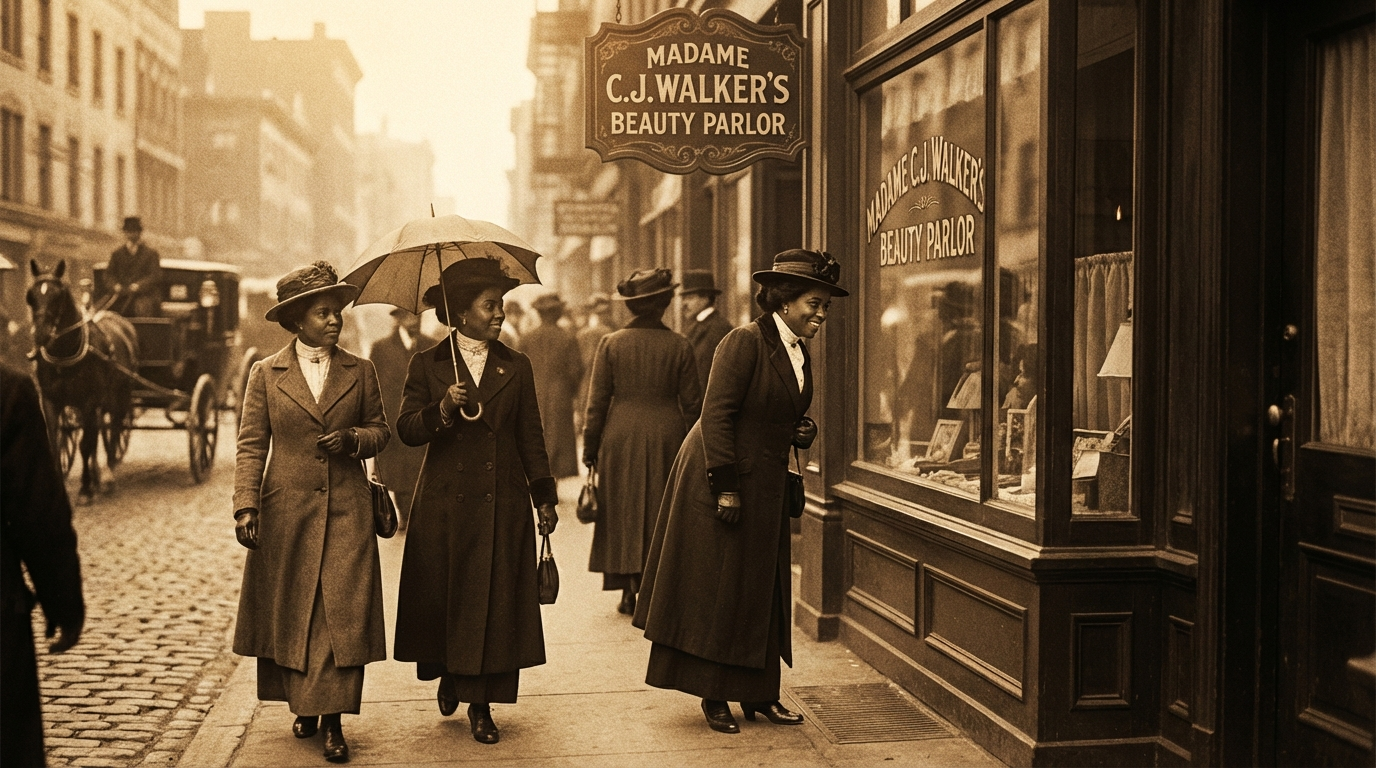
Vintage Black-owned beauty business storefront from the 1910s

Madam C.J. Walker didn’t just make hair products. She built the first self-made female millionaire empire in American history — in 1910, as a Black woman, in a country that wouldn’t let her vote for another decade. She employed thousands of Black women and gave them economic independence when the only other option was domestic work.

Maggie Lena Walker became the first woman of any race to charter a bank in the United States — the St. Luke Penny Savings Bank in Richmond, Virginia, in 1903. She didn’t wait for permission. She built financial infrastructure for an entire community that the banking system had locked out.

Annie Turnbo Malone was actually Walker’s mentor and built a beauty empire before her — including Poro College in St. Louis, which trained thousands of Black women in business. Her net worth hit $14 million in today’s dollars. You’ve probably never heard her name.

These women didn’t just succeed. They built industries from nothing, in a country designed to give them nothing.

The Healers

Black woman doctor in a 1950s hospital laboratory

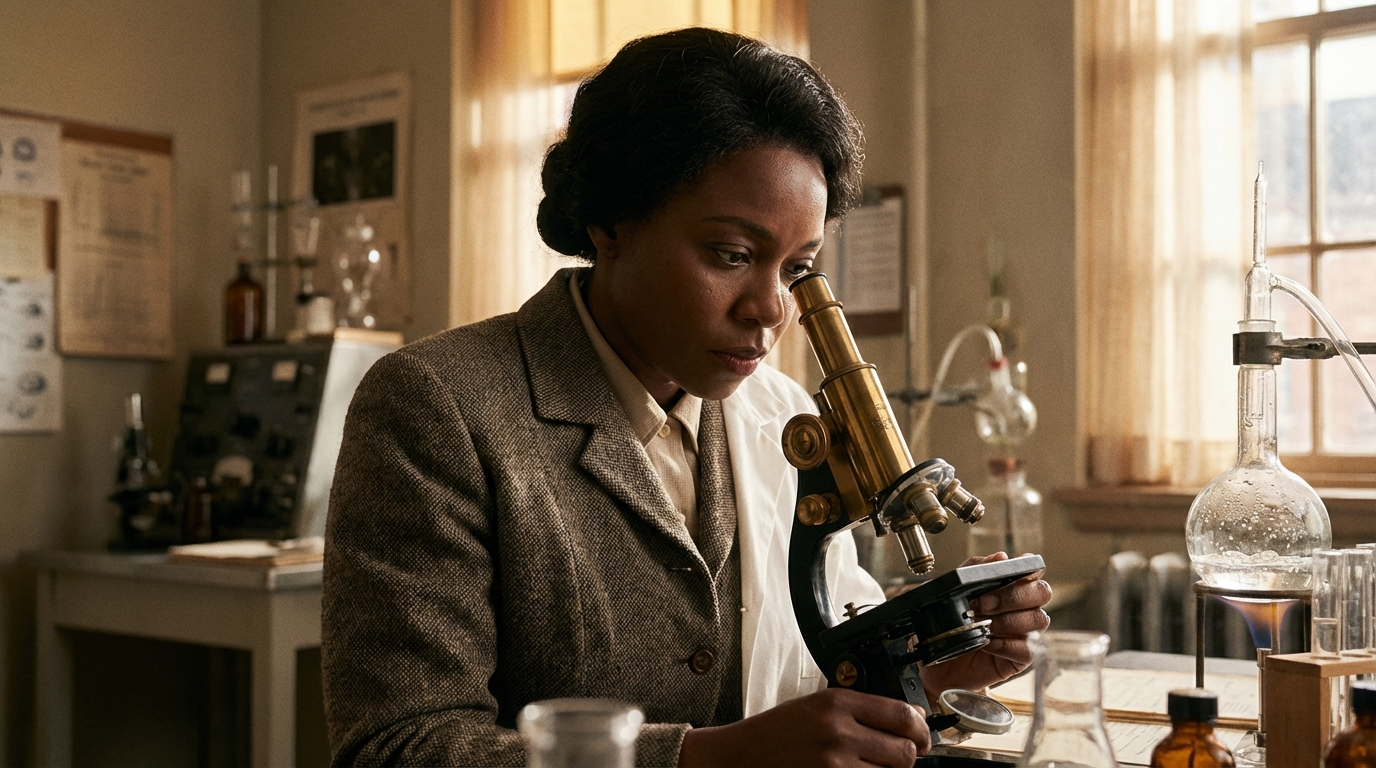
Henrietta Lacks — her cells, taken without consent in 1951, became the foundation of modern medicine. The polio vaccine. Cancer research. COVID treatments. Her family didn’t see a dime for decades. The medical establishment built an empire on a Black woman’s body and didn’t even tell her family.

Dr. Patricia Bath invented laser cataract surgery in 1988 — a technology that has restored sight to millions of people worldwide. She was the first Black woman to receive a medical patent. She had to fight her own colleagues just to be allowed in the operating room.

Biddy Mason walked 1,700 miles behind her enslaver’s wagon train, won her freedom in a California courtroom, and then used her earnings as a nurse and midwife to buy property, found a church, and build institutions that served Los Angeles’s Black community for generations.

Your kids (read about 7 Things Every Black Parent Should Tell Their Child) should know these names. These are the women who healed us, literally, while the system tried to break them.

✊🏾 Join 500,000+ families keeping Black history alive at home.

Get tools, stories, and exclusive offers delivered to your inbox.

[SUBSCRIBE] – Newsletter Tag Posts

The Fighters

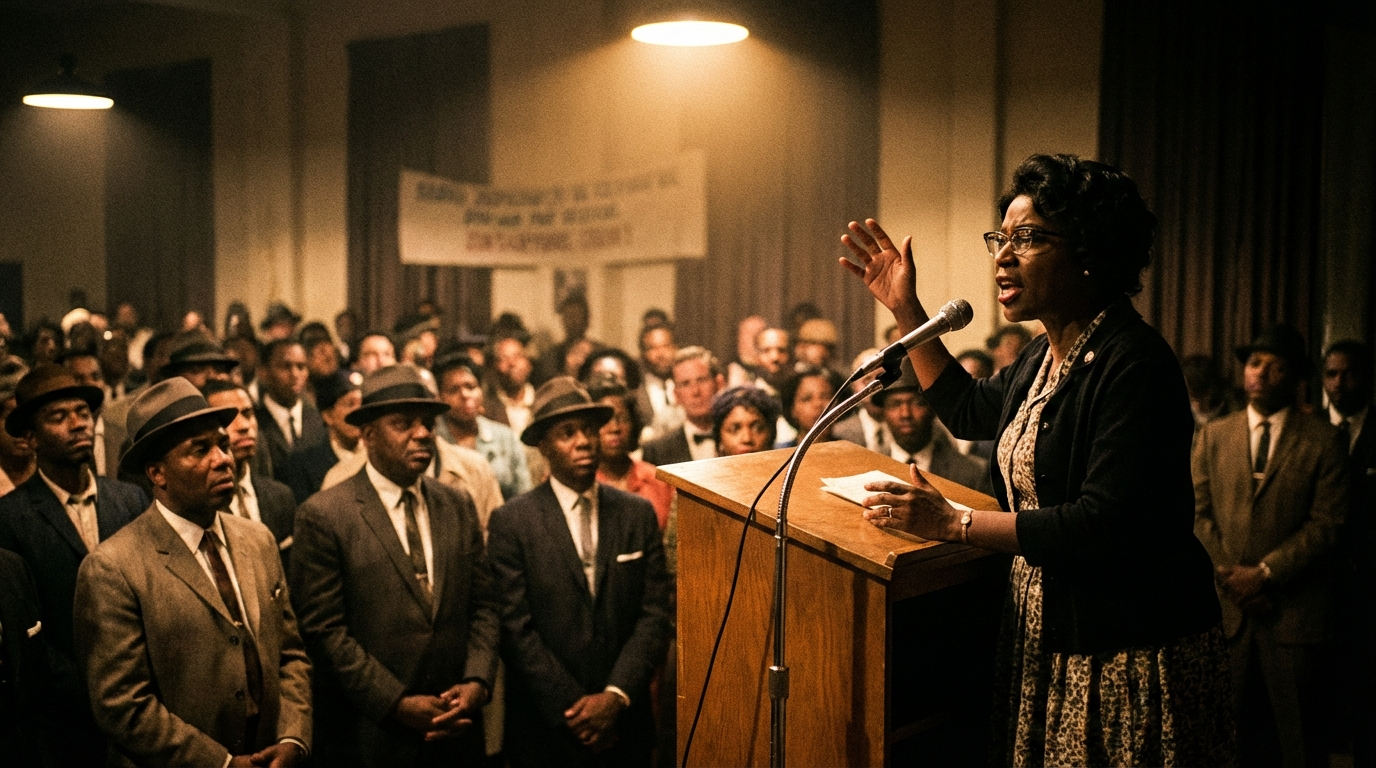
Black woman speaking passionately at a civil rights era meeting

Fannie Lou Hamer was beaten in a Mississippi jail for trying to register to vote. She went back. She testified before the Democratic National Convention. She said “I’m sick and tired of being sick and tired” and meant every word with her full chest.

Claudette Colvin refused to give up her bus seat nine months before Rosa Parks — at fifteen years old. The movement chose Parks as the face of the boycott because Colvin was a pregnant teenager and they worried about optics. She deserves her flowers.

Ella Baker organized the Student Nonviolent Coordinating Committee, mentored the young people of the movement, and deliberately stayed out of the spotlight because she believed in collective leadership over celebrity. Every sit-in, every freedom ride — her fingerprints were on the strategy.

These women didn’t just participate in history. They built the movements that other people got credit for.

Why This Matters for Your Family

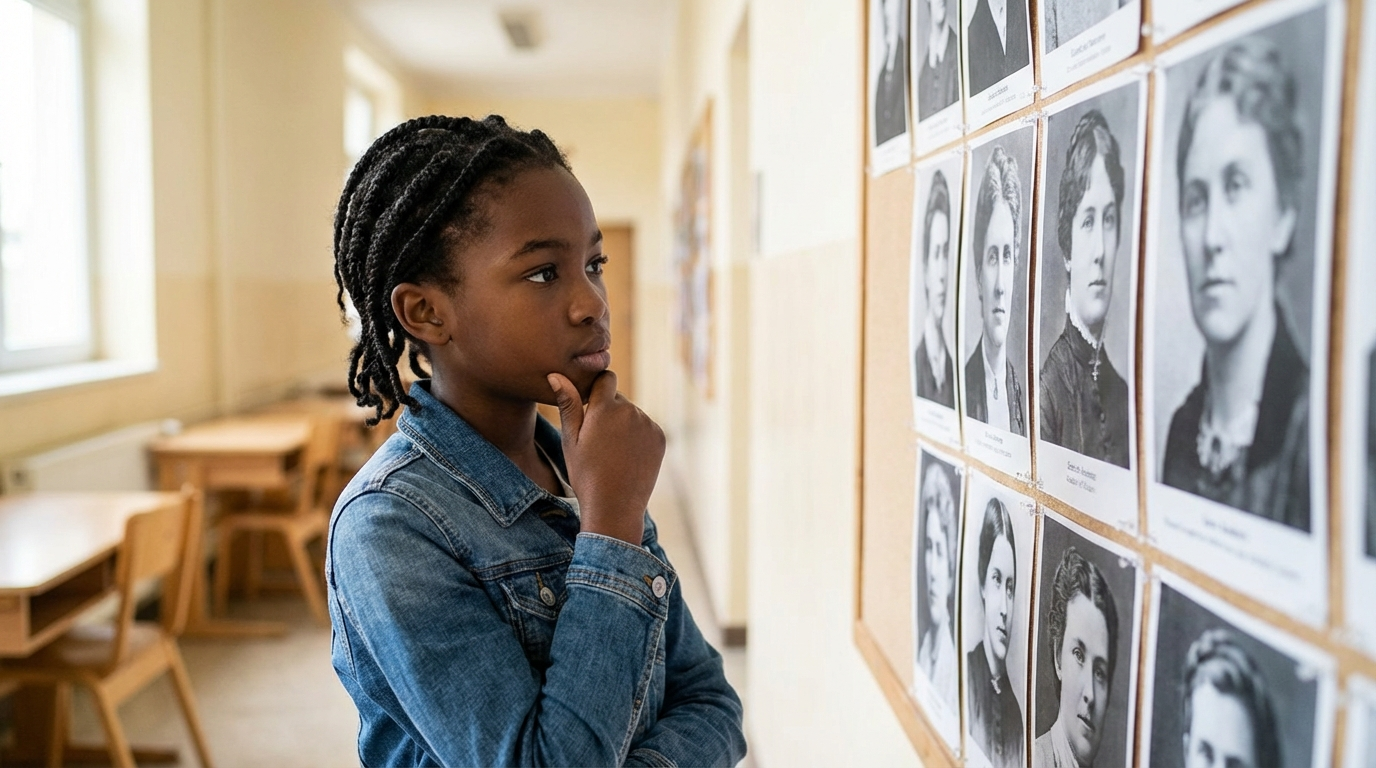
Young Black girl looking at a school bulletin board display

Here’s the thing about representation: when your daughter sees a “Women’s History Month” display at school with zero Black faces, she gets a message. When your son learns about inventors and scientists and every single one is white, he gets a message.

And the message is: we weren’t there. We didn’t contribute. We don’t count.

That’s a lie. And it’s our job to correct it.

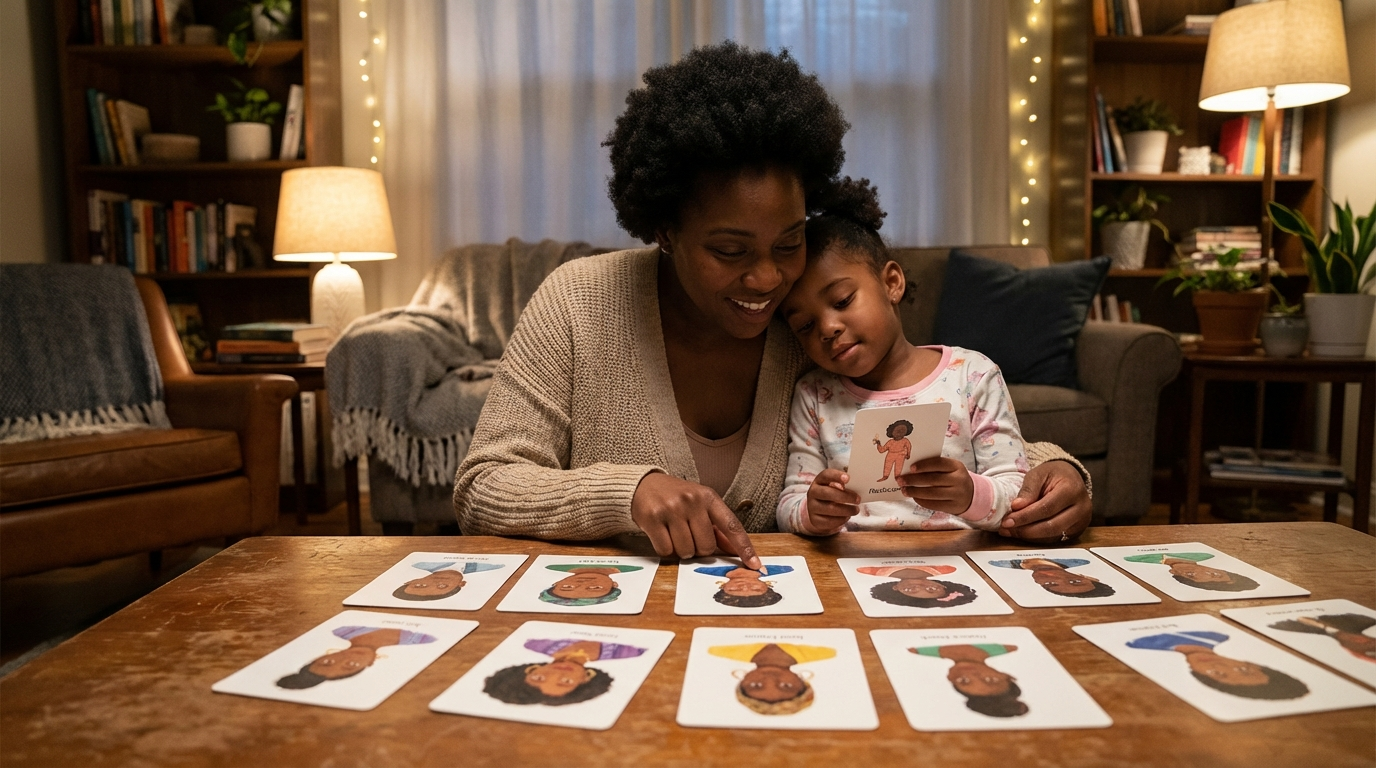
That’s why the Women’s Edition Black History Flashcards exist — 52 cards featuring Black women who changed the world. Not as a supplement to the “real” history. As the history that’s been deliberately kept from your family.

Put them on the dinner table. Quiz each other. Let your kids hold these names in their hands.

Don’t Wait for the Textbook

Black mother and daughter studying flashcards with portraits of Black women

Women’s History Month ends in a few days. But teaching your children about Black women who built this country? That’s a year-round commitment.

Start tonight. Pick one name from this post. Look her up together. Talk about what she did and what it cost her.

Then ask your kids: “Why do you think we didn’t learn about her in school?”

That conversation alone is worth more than a month of bulletin boards.

And once they know about these women — the real question is: can they recognize when that legacy is being erased in real time? Read: Teaching Your Kids to See the Mask Before It Slips.

Which Black woman do you think deserves way more recognition than she gets? Tell me — I want to hear your pick. ✊🏾

Don’t miss what matters.

Join the Urban Intellectuals family — history, culture, and tools for raising empowered Black children. Straight to your inbox.

[SUBSCRIBE] – Newsletter Tag Posts

0