
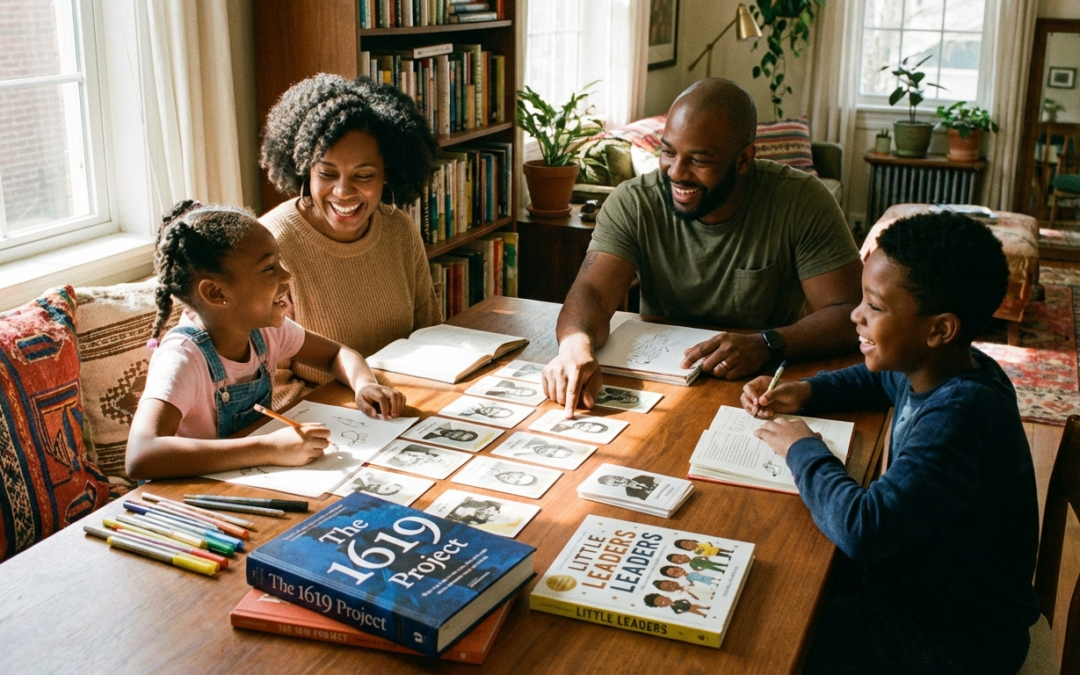
February comes and goes. The posters come down. The special units end.
And then what?
If Black history only lives at school — in a short unit, once a year — your child is getting a footnote. Not a foundation.
The good news: you don’t need a lesson plan, a curriculum, or a teaching degree to change that. You need 20 minutes, a little intention, and a few good tools.
Here are 12 Black history activities you can do at home — no prep, no pressure, and yes, the kids will actually want to do them.
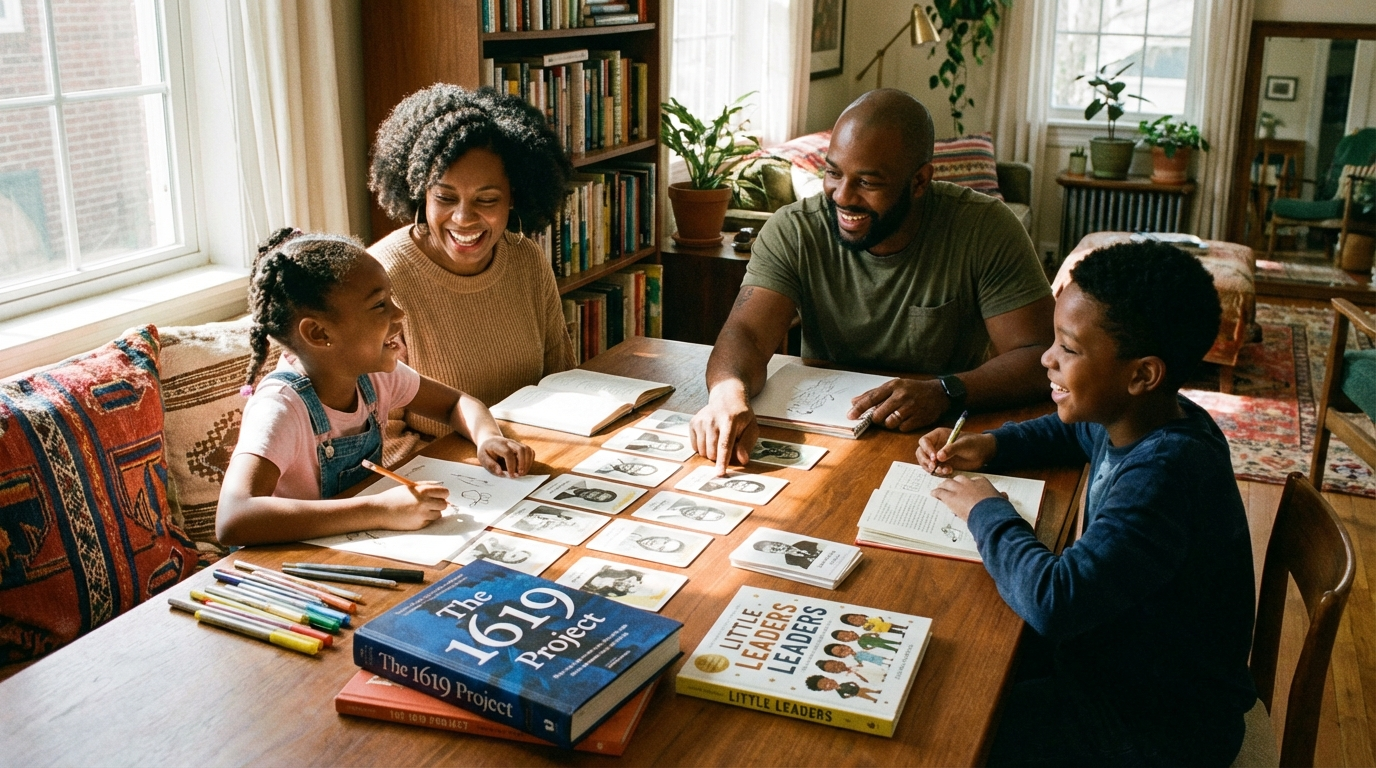
1. The “Who Is This?” Card Game
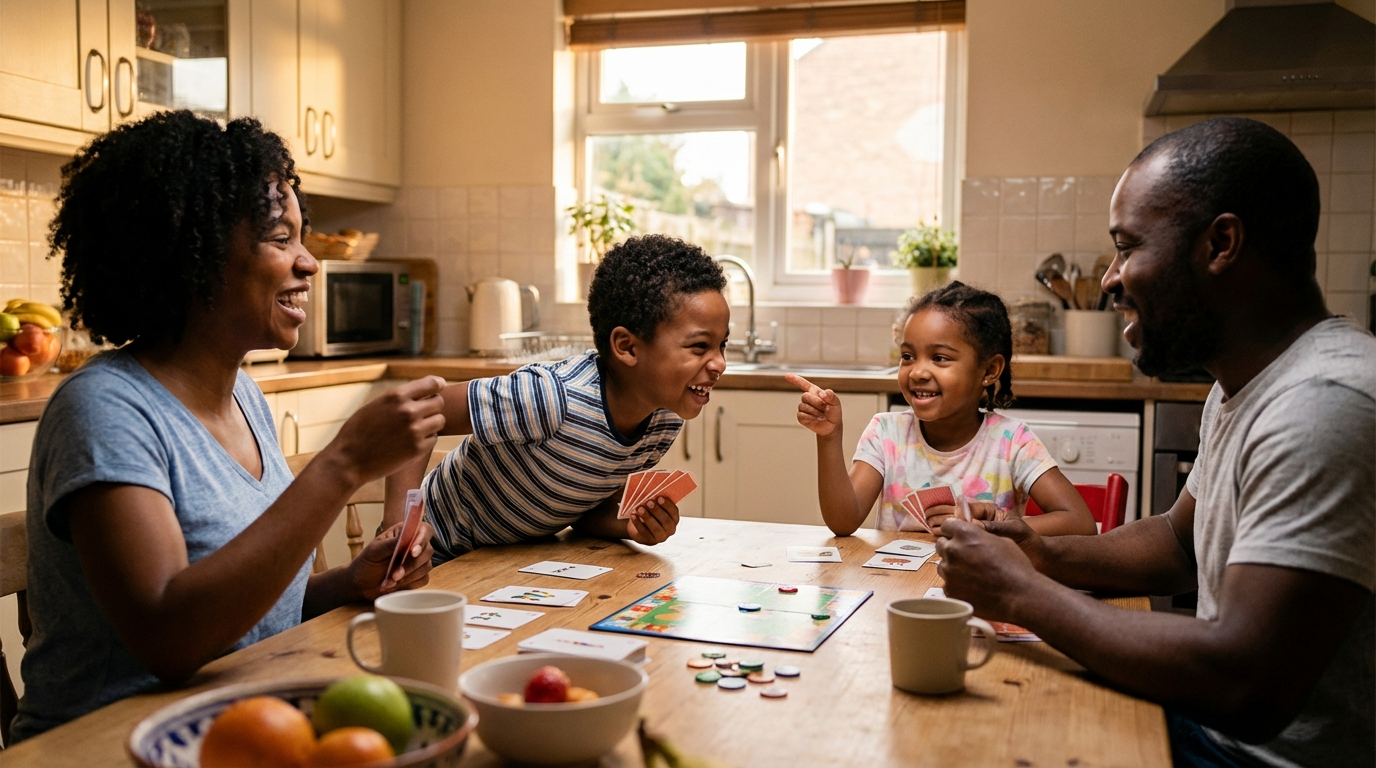
Pull out a deck of Black history flashcards and flip through them together. One person reads the clues on the back, everyone else guesses.
It sounds simple. But give it five minutes and watch what happens — kids get competitive, parents get humbled (“I didn’t know that!”), and the names start to stick.
Black History Flashcards → — 500,000+ sold because this works in real homes, not just ideal ones.
2. Breakfast With a Legend
Pick one historical figure each week. Print or pull up a photo. Put it on the table at breakfast.
One rule: say their name before anyone eats.
That’s it. Over time, those names become normal. They become part of your family’s conversation. Your child starts connecting present-day events to people they know by face and name.
3. Black History Bingo Night
Turn family game night into a history lesson nobody asked for — and everybody enjoyed.
Black history bingo boards cover figures, events, and facts. Teams. Prizes. The whole thing.
Works best with 4+ players and at least one grandparent who thinks they know everything. (They usually win.)
4. The “They Left This Out” Research Project
Challenge your older kids (10+): find one Black historical figure who is NOT in their school textbooks.
Research them. Write a paragraph. Present it at dinner.
This does two things: it teaches research skills, and it teaches your child to notice absences — which is one of the most important critical thinking skills they can have.
✊🏾 Join 500,000+ families keeping Black history alive at home.
Get tools, stories, and exclusive offers delivered to your inbox.
5. Watch a Documentary Together — Then Talk
Not just watch. Talk.
Pick one age-appropriate documentary about Black history. Watch it together. Then, before anyone gets up from the couch, each person says one thing they didn’t know before.
Some starting points:
- 13th (Netflix, ages 13+)
- The Black Panthers: Vanguard of the Revolution (ages 14+)
- John Lewis: Good Trouble (all ages)
- Hidden Figures (the film is great for kids 8+)
The conversation after is where the real learning happens.
6. Build a Family History Wall
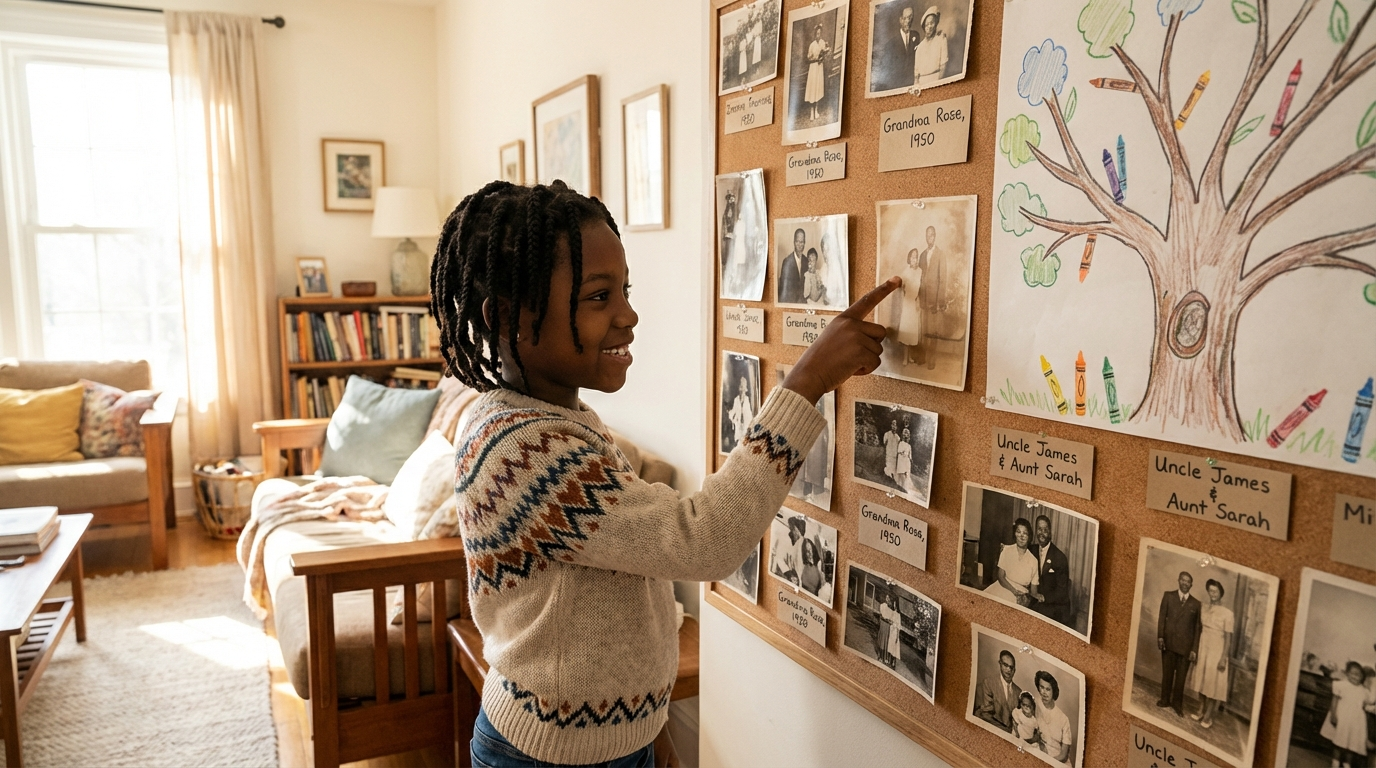
This one takes a Sunday afternoon and becomes a permanent fixture.
Get a corkboard or a section of wall. Start with what you know: names, places, photos, dates. Then ask your elders — parents, grandparents, great-aunts — to fill in the gaps.
You don’t need to trace back to Africa to make this powerful (though if you can, do it). Your family’s story is Black history. Make it visible.
7. Cook a Meal With a Story
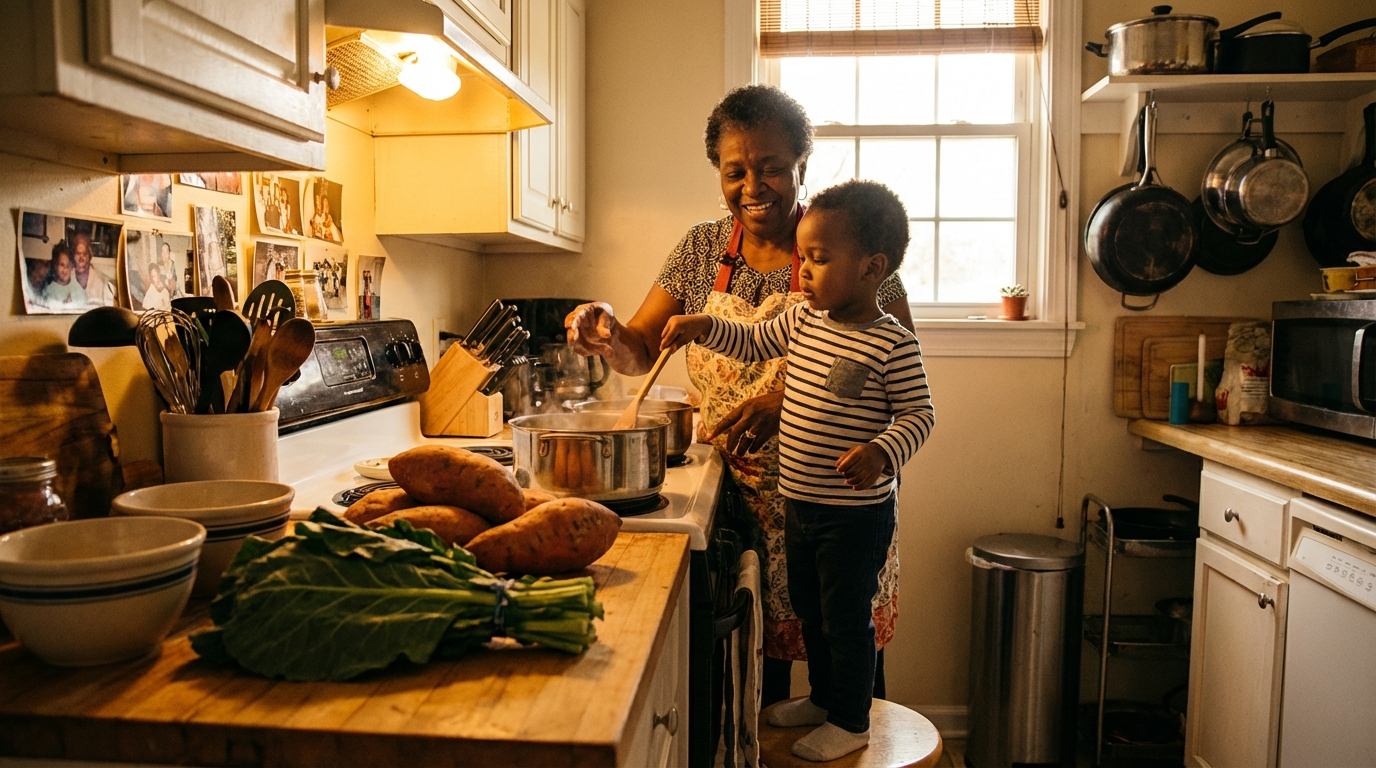
Every dish in Black American cooking has history behind it. Pick one this week.
Collard greens. Sweet potato pie. Red beans and rice. Gumbo. Fried catfish.
Cook it together. While you cook, talk about where it came from — African roots, slavery, Reconstruction, the Great Migration, Sunday traditions. The food becomes a doorway.
Bonus: find a dish connected to a specific region your family came from.
8. Read One Page a Night
Not a whole book. One page.
Find a book about Black history that’s right for your child’s age. Read one page aloud at bedtime. That’s it. One page a night is 30 pages a month, 365 pages a year.
Over a year, that’s the equivalent of a real education.
Some good starting points:
- Hand in Hand by Andrea Davis Pinkney (ages 6-10)
- X: A Novel by Ilyasah Shabazz (ages 12+)
- The Warmth of Other Suns by Isabel Wilkerson (teens and adults)
9. The “Name That Ancestor” Road Trip Game
On the next long car ride, take turns naming Black historical figures.
One rule: if you name someone the rest of the family knows, you get a point. If you name someone nobody else knows, you get three points.
This turns the car ride into a research motivation session. Kids will study before the next trip. Not because you asked them to — because they want to win.
10. Write a Letter to a Historical Figure
Pick a figure your child has been learning about. Have them write a letter — what would they say? What questions would they ask? What would they want them to know about the world today?
This is one of the most powerful exercises for older kids. It builds empathy, historical thinking, and writing skills all at once.
Keep the letters. Pull them out in five years.
11. Black History Trivia at Dinner
Every dinner has a trivia question. One question, one conversation.
Doesn’t need to be a quiz. Could be: “Who was the first Black woman to travel to space? What do you think it was like for her?”
The question starts the conversation. The conversation builds the knowledge. The knowledge builds the identity.
12. Let Your Child Teach You
Once a month, flip the script. Your child picks a historical figure, researches them, and teaches the family what they learned.
Give them a real audience: invite grandparents, siblings, cousins. Let them present.
This does something that passive learning can’t: it makes your child the authority. The expert. The keeper of the story.
That’s not just education. That’s identity.
The Point Isn’t the Activity — It’s the Habit
One activity won’t change anything.
But one activity, done regularly, in a home where Black history is normal — that changes everything.
You’re not trying to replicate school. You’re trying to build something school can’t: a child who knows who they are, where they come from, and why it matters.
That happens in the small moments. The breakfast table. The car ride. The bedtime page.
Ready to make it a habit? The Black History Flashcards are how over 500,000 families have made Black history part of their everyday routine. Not just February. Every day.
Urban Intellectuals has been putting Black history in Black homes since Freddie Taylor started with a single deck of cards. See the full collection →
Which of these activities will you try first? Share your plan in the comments — and tell us which ones your kids already love!
Don’t miss what matters.
Join the Urban Intellectuals family — history, culture, and tools for raising empowered Black children. Straight to your inbox.
📖 Also read: Why Volume 1 Black History Flashcards Still Matter in 2026


 Flashcards
 Games
Games Apparel & Homeware
 Travel
 Schools
 Memberships
 Sankofa Club (Children)
 About Us