
🎙️ LISTEN TO THIS ARTICLE
Prefer to listen? We turned this article into a podcast conversation.
Let me ask you something.
Where is your money right now? Not “how much” — where. Which institution is holding it? What community is it serving? Who benefits when your checking account balance sits there overnight?
Because if the answer is a major bank that has redlined our neighborhoods, denied our mortgages, and profited off our deposits while investing everywhere but where we live — we need to have a conversation.
Why Black-Owned Banks Matter

Black-owned banks aren’t just banks. They’re resistance.
The first ones were founded right after the Civil War, when formerly enslaved people pooled their resources to create financial institutions that would actually serve them. Because the mainstream banks wouldn’t. Flat out refused.
That was 1865. And in 2026, Black families are still being denied mortgages at higher rates than white families with lower credit scores. The system hasn’t fixed itself. It was never going to.
Black-owned banks exist to fill the gap that racism created. They lend in communities where big banks won’t. They approve small business loans for entrepreneurs who’ve been turned away three, four, five times. They keep money circulating within our communities instead of extracting it.
The Numbers Tell the Story

In 1994, there were 54 Black-owned banks in America. Today? About 20.
That decline isn’t because they failed. It’s because the system made it almost impossible for them to survive. Larger banks acquire smaller ones. Regulatory burdens hit community banks harder. And every economic downturn hits Black financial institutions first and hardest.
But the ones that survived? They’re built different. They’ve weathered every storm because the communities they serve won’t let them fail.
Banks You Should Know
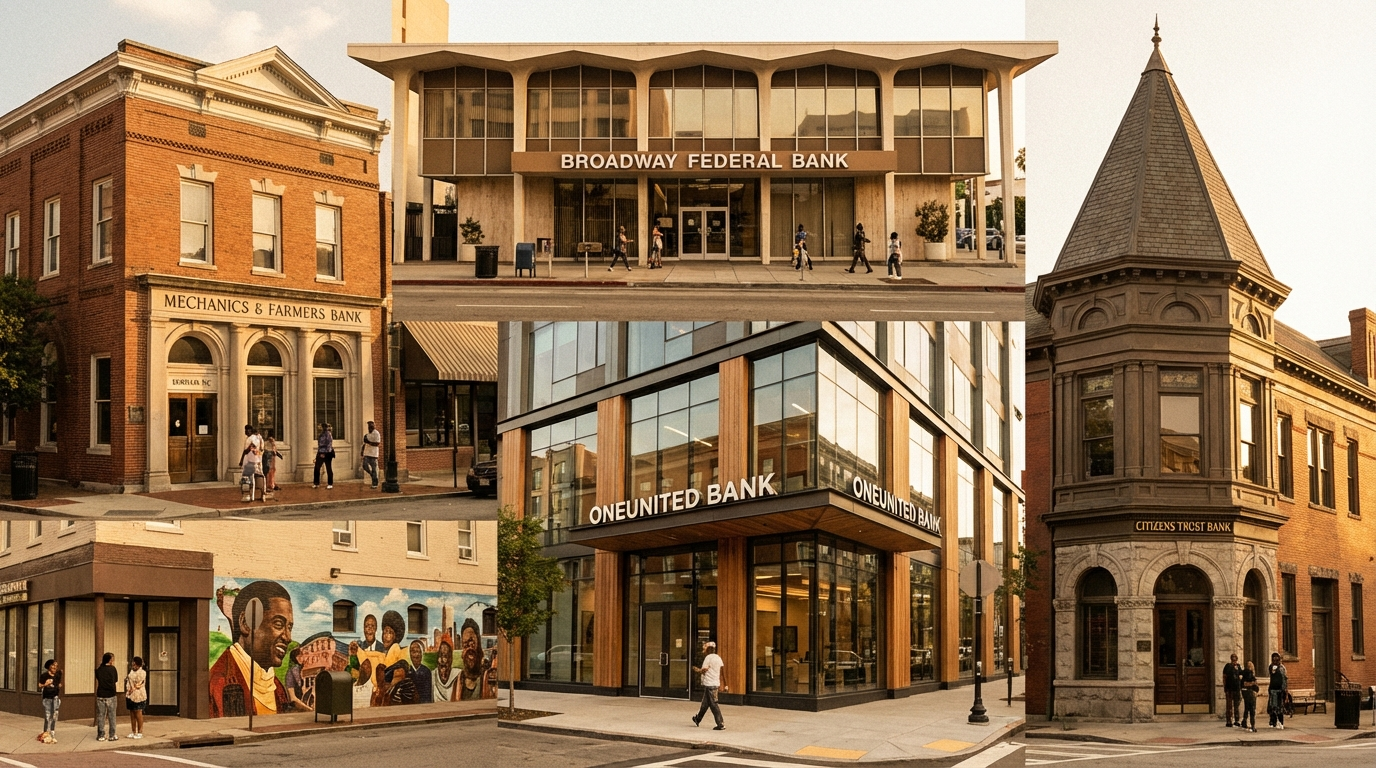
OneUnited Bank — The largest Black-owned bank in America, with branches in Massachusetts, Florida, and California. They were one of the first banks to offer a Black History debit card, and they’ve been at the forefront of the #BankBlack movement. You can open an account from anywhere in the country.
Citizens Trust Bank — Atlanta, Georgia. Founded in 1921. This bank survived the Great Depression, the Civil Rights era, and the 2008 financial crisis. It’s been financing Black businesses in Atlanta for over a century.
Liberty Bank and Trust — New Orleans, Louisiana. Founded in 1972, it’s now one of the largest Black-owned banks in the country with branches across seven states. They’ve been critical in post-Katrina rebuilding and continue to invest heavily in underserved communities.
Industrial Federal Credit Union — Washington, D.C. Founded in 1934 during the Great Depression. Credit unions operate slightly differently than banks — they’re member-owned, which means your money directly supports the institution and its community.
Optus Bank — Columbia, South Carolina. Formerly Victory Savings Bank, founded in 1921. Recently rebranded and expanded its mission to focus on closing the racial wealth gap through innovative lending programs.
Harbor Bank of Maryland — Baltimore. Over 60 years of service, consistently rated as one of the best community development financial institutions in the country.
✊🏾 Join 500,000+ families keeping Black history alive at home.
Get tools, stories, and exclusive offers delivered to your inbox.
But I Can’t Switch Banks — Can I?

You can. And it’s not as hard as you think.
The #BankBlack and #MoveYourMoney movements have made it simpler than ever. Most Black-owned banks now offer online banking, mobile apps, and remote account opening. You don’t have to live near a branch.
Here’s a realistic approach: you don’t have to move everything at once.
Start with a savings account. Open one at a Black-owned bank and set up an automatic transfer — even $25 a month. That’s $300 a year that stays in your community instead of funding someone else’s.
Move one bill. Pick one automatic payment and route it through your new account. Get comfortable with the platform.
Talk to your family. When your parents, siblings, and cousins all bank at the same institution, the collective impact multiplies. This is how community economics works.
The History Our Kids Need to Know
Here’s what makes this a family conversation, not just a financial one.
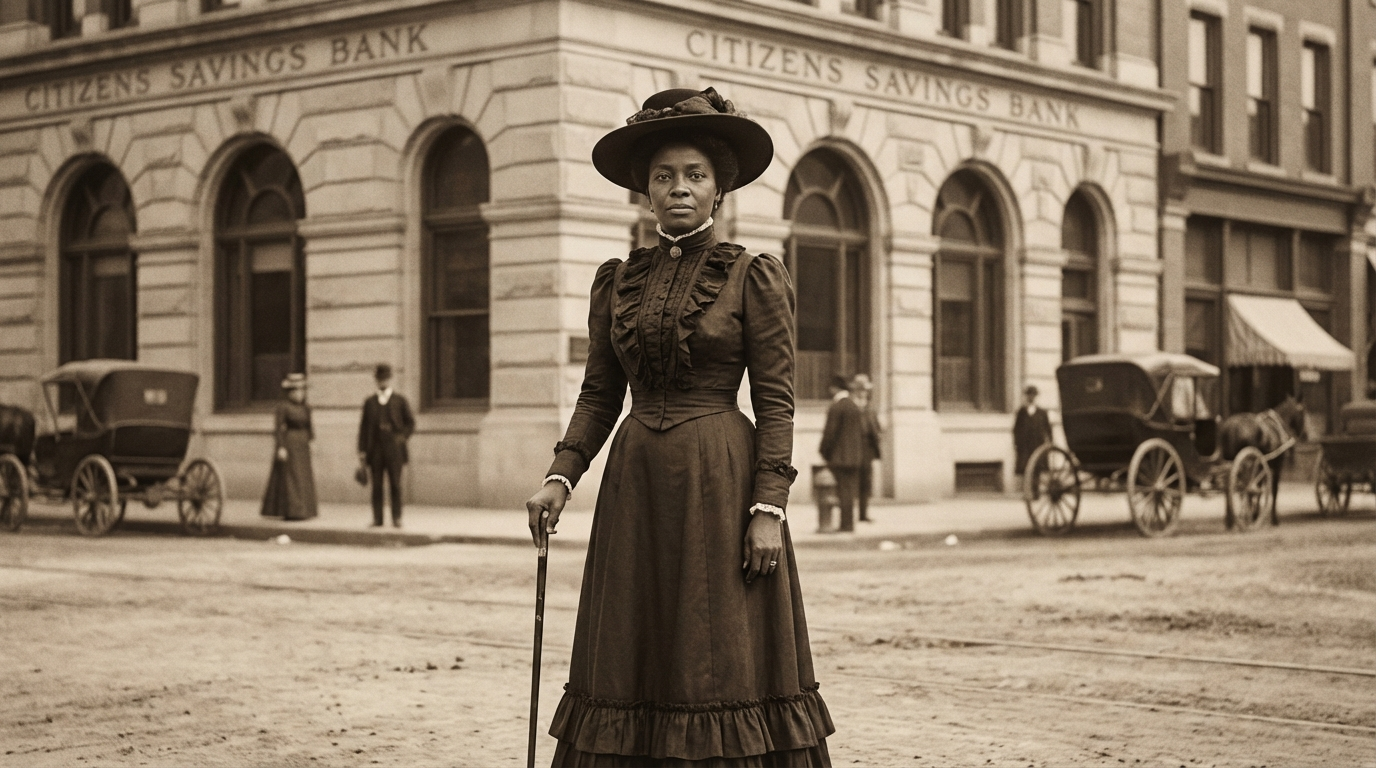
Maggie Lena Walker became the first woman of any race to charter a bank in the United States — in 1903. The St. Luke Penny Savings Bank in Richmond, Virginia, was designed specifically to serve the Black community.
The Freedman’s Savings Bank, established in 1865, was one of the first financial institutions for formerly enslaved people. It had 70,000 depositors before it collapsed — not because of mismanagement by the depositors, but because white trustees invested the money recklessly. The depositors, many of them formerly enslaved, lost everything.
These aren’t just history lessons. They’re warnings and instructions. Our financial institutions matter. Who controls them matters. And teaching our children about economic self-determination is just as important as teaching them about the Civil Rights Movement.
This is the kind of history that connects the past to the present — the kind you’ll find in our Black History Flashcards. Figures like Maggie Lena Walker, stories like the Freedman’s Bank. Not just names and dates, but lessons that still apply today.
What You Can Do This Week

This isn’t a “someday” thing. This is a “this weekend” thing.
1. Look up whether there’s a Black-owned bank or credit union near you — or one you can join online.
2. Open a savings account. Even with $50. The act of starting matters more than the amount.
3. Tell somebody. Share this article. Text it to your group chat. The movement grows person by person.
4. Teach your kids. Show them where money goes. Explain why it matters who holds it. Give them a financial education that centers community wealth, not just individual wealth.

Our grandparents understood something that got lost somewhere along the way: money in our institutions builds our neighborhoods, funds our schools, backs our businesses, and creates generational wealth that stays in the family.
It’s time we remembered.
Love, peace, and power to the people. ✊🏾
Do you bank Black? Thinking about switching? Drop your experience in the comments — let’s put each other on.
Don’t miss what matters.
Join the Urban Intellectuals family — history, culture, and tools for raising empowered Black children. Straight to your inbox.
Related: No One Becomes a Billionaire Without Taking From Someone


 Flashcards
 Games
Games Apparel & Homeware
 Travel
 Schools
 Memberships
 Sankofa Club (Children)
 About Us