
🎙️ LISTEN TO THIS ARTICLE
Prefer to listen? We turned this article into a podcast conversation.
Related: No One Becomes a Billionaire Without Taking From Someone
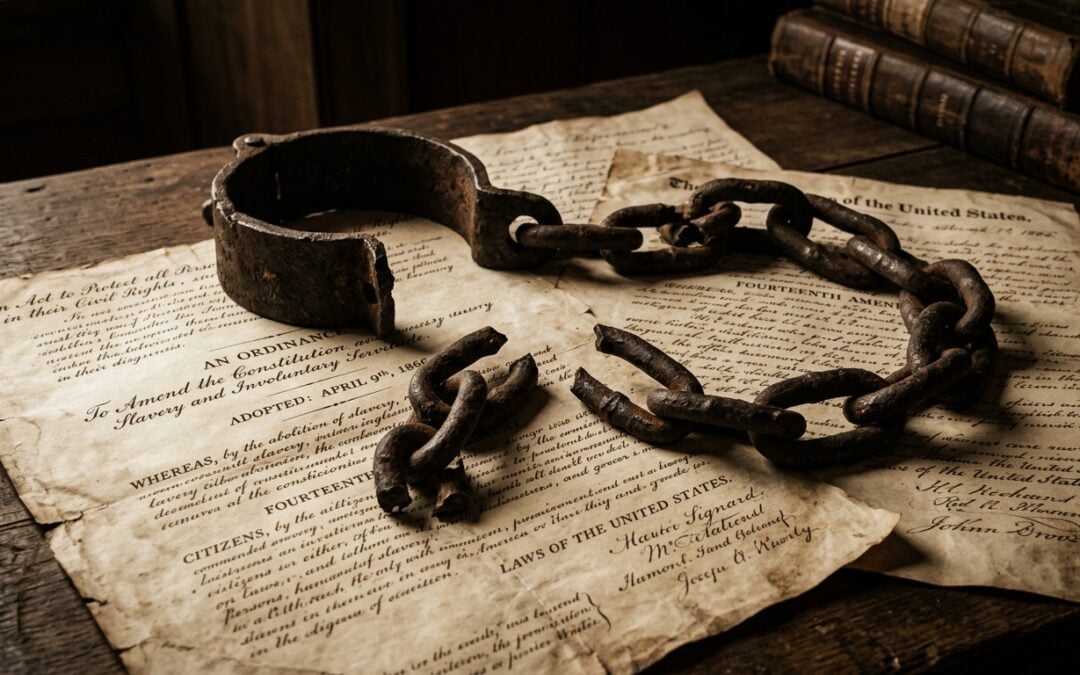
The Thirteenth Amendment ended slavery in 1865.
Or did it?
Read it carefully. The amendment states that “neither slavery nor involuntary servitude, except as a punishment for crime whereof the party shall have been duly convicted, shall exist within the United States.”
That loophole became the foundation for the Black Codes.
How the Codes Worked
Vagrancy laws criminalized being unemployed. If you were Black and couldn’t prove you had a job, you were arrested and forced to labor.
Apprenticeship laws allowed white “employers” to take custody of Black orphans and dependents, often their former enslavers’ children.
Civil restrictions forbade Black people from carrying firearms, testifying against white people, serving on juries, or holding public office.
From Black Codes to Jim Crow
When Reconstruction ended in 1877, white supremacists regained power. The Black Codes evolved into Jim Crow laws — more sophisticated, more comprehensive, and far more durable.
The “punishment for a crime” loophole in the Thirteenth Amendment? It’s still there. It’s still being used.
The Echoes Today
When you look at mass incarceration statistics, you’re looking at the legacy of the Black Codes. The United States has 5% of the world’s population but holds 25% of its prisoners.
The Black Codes weren’t a historical aberration. They were a template.
Explore Black History Flashcards and give your family the knowledge they need.
Also see: 50 Truths They Tried to Erase: Why This Book Is Hitting Different Right Now


 Flashcards
 Games
Games Apparel & Homeware
 Travel
 Schools
 Memberships
 Sankofa Club (Children)
 About Us